
Allergy-friendly duvet: which one should you choose?

Updated October 2026.
Short answer: an allergy-friendly duvet is one you can wash properly, at 60 degrees or more, and that keeps its shape wash after wash. What usually causes trouble in bed is dust mites, and washing helps more against them than any particular filling. A fibre duvet with a cotton cover is the easiest choice. A down duvet works too, as long as you tolerate down and look after it.
What makes a duvet allergy-friendly?
A duvet is allergy-friendly when it is easy to keep free of the things that actually cause trouble. For most people that means dust mites, not the filling itself.
The Swedish Asthma and Allergy Association explains that dust mites live mainly in mattresses, duvets, pillows and bedding. They feed on skin flakes and thrive where it is warm, damp and poorly ventilated. The association also says that what matters is that the materials can be washed thoroughly and keep their shape after repeated washing.
That gives you three things to look for. The duvet should handle at least 60 degrees. The filling should rise again after washing and drying. And the cover fabric should breathe, so the moisture from the night does not stay inside.
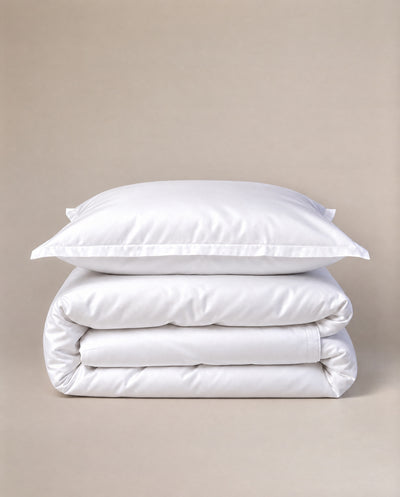
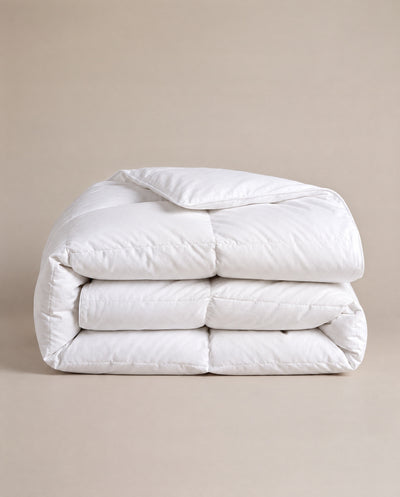
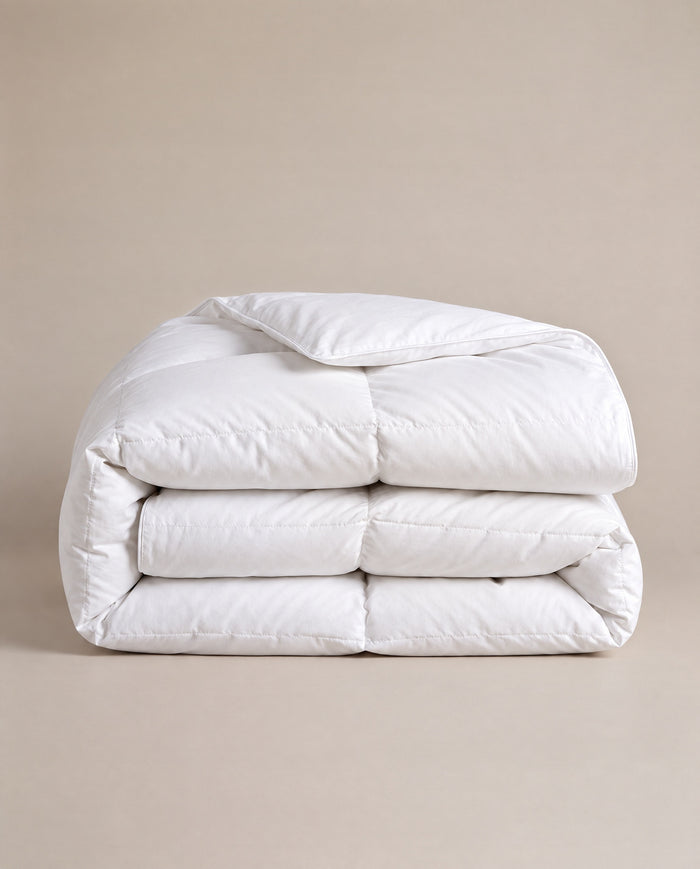
The A Funky Dream Hotel Duvet is made exactly that way. The filling is siliconised hollow polyester fibre, the cover is 100% cotton and the duvet can be washed at 60 degrees. The filling is allergy-friendly, and ESS Group's hotels make their beds with this very duvet, tested by guests night after night. You can order it for your home in 150×210 or 230×220.
Is down bad if you have allergies?
Not necessarily. The down itself is rarely the problem. What builds up in a duvet that never gets washed is.
Sleep Foundation writes that research suggests down itself is no more allergenic than alternative materials. Dust mites and mould in unwashed down can cause flare-ups, but that applies to almost any bedding. The same source notes that many down alternatives are more hypoallergenic than real down, and that most can be machine washed and are easy to care for.
If you know you react to down or feathers, choose fibre. If you are not sure what you react to, your doctor is the right place to start. 1177, the Swedish public health guide, explains when to seek care for a suspected allergy.
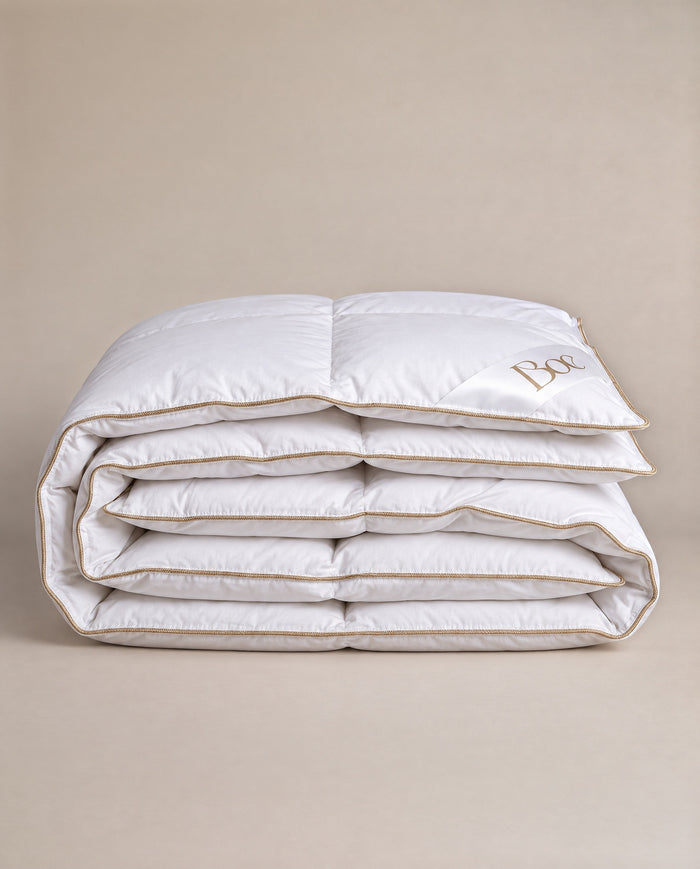
If you tolerate down and want its lightness, there is the Sense of Satisfaction Down Duvet, Boe's own down duvet with 60% duck down and 40% duck feather in a 100% cotton cover. It also handles 60 degrees, but down needs more care when it dries.
Fibre or down: the difference at a glance
Both duvets can be washed at 60 degrees. The difference lies in the feel and in how much work the washing takes.
| Feature | A Funky Dream Hotel Duvet | Sense of Satisfaction Down Duvet |
|---|---|---|
| Filling | Siliconised hollow polyester fibre | 60% duck down and 40% duck feather |
| Cover | 100% cotton | 100% cotton |
| Washing | 60 degrees | 60 degrees |
| Drying | Easy to care for | Takes time and care so the down does not clump |
| Allergies | Allergy-friendly filling | Natural filling, if you tolerate down |
| Hotel link | Used in ESS Group's hotels | Boe's own bedding |
| Suits you if you | want the simplest possible care | want the lightness of down and care for it well |
For a closer look at down versus feather, read Down and feather: how to choose the right duvet and pillow.
How often should you wash your duvet if you have allergies?
Every other month, at 60 degrees or more. That is the advice from the Swedish Asthma and Allergy Association for duvets, pillows and blankets. Sheets and pillowcases go in the wash every other week.
1177 gives the same temperature: wash pillows and duvets at 60 degrees regularly, and rinse thoroughly. Then let the duvet dry completely before you make the bed. Moisture left in the filling is exactly what dust mites thrive in.
Freezing is not a shortcut. The Swedish Asthma and Allergy Association notes that dust mites die at minus 18 degrees, but the allergen stays behind. That is why washing is what makes the difference.
How to wash and dry a down duvet step by step is covered in Washing a down duvet and pillow. General care advice for the rest of the bed is in Care guide for bedding.
What else in the bedroom matters?
The duvet is only one part of the bed. The pillow, the mattress and the air in the room matter just as much.
The Swedish Asthma and Allergy Association gives a few simple tips for the home:
- Keep relative humidity low, ideally below 45 percent in winter.
- Make sure the room is well ventilated.
- Avoid airing the room while you dry laundry indoors.
- Consider dust mite covers for mattress, pillow and duvet. Tightly woven mattress protectors can reduce dust mite growth.
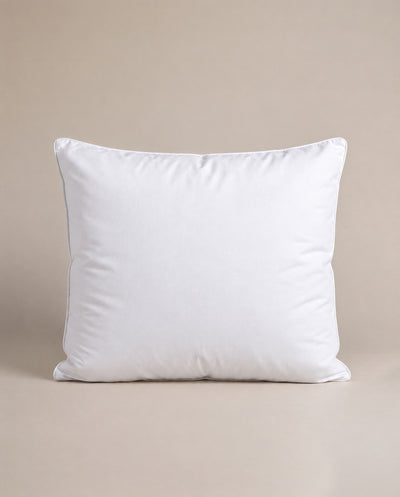
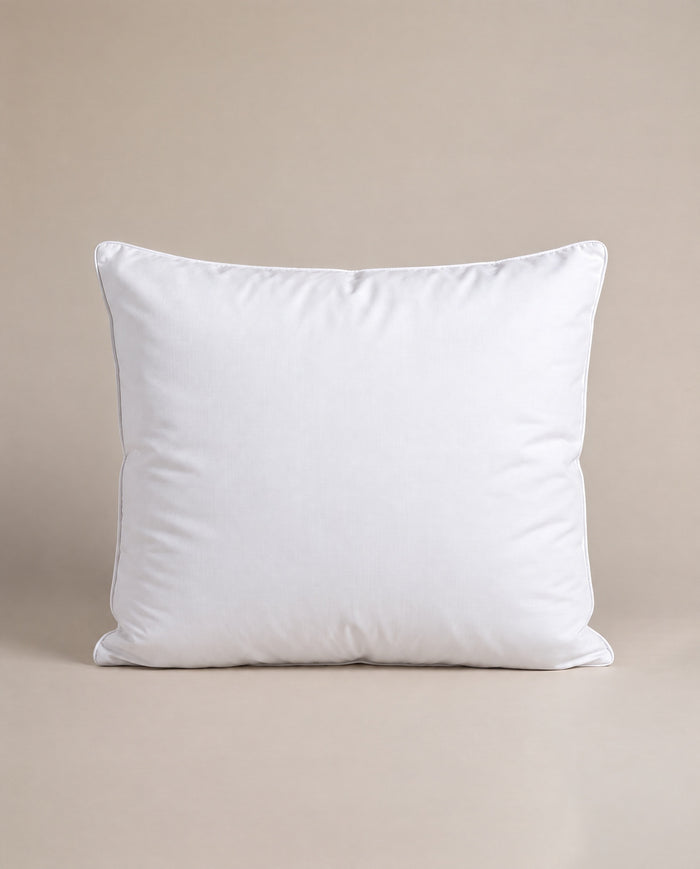
Choose a pillow that handles the same wash as your duvet. The A Funky Dream Hotel Pillow has the same filling and the same cotton cover, and can be washed at 60 degrees. More on the whole bed for sensitive sleepers is in Allergy-friendly bedding.
How to choose an allergy-friendly duvet
- Read the care label first. The duvet should handle at least 60 degrees. Otherwise you cannot follow the dust mite advice.
- Choose the filling for you. Fibre if you react to down or want the simplest care. Down if you tolerate it and want the lightness.
- Check the cover fabric. A cotton cover breathes and lets the moisture from the night escape.
- Think about size. A large double duvet needs a washing machine with plenty of room. Two single duvets are easier to wash at home.
- Plan the washing. Duvet and pillow every other month, sheets every other week. Dry everything completely before you make the bed.
- Think of the whole bed. A pillow that handles 60 degrees and a clean duvet cover matter as much as the duvet.
Shop
Products in this guide
Frequently asked questions
Which duvet is best for allergy sufferers?
No single duvet suits everyone. According to the Swedish Asthma and Allergy Association, what matters is that the materials can be washed thoroughly at 60 degrees or more and keep their shape after repeated washing. A fibre duvet with a cotton cover is the easiest to care for. If you know you react to down or feathers, choose fibre.
Can you have a down duvet if you are allergic to dust mites?
It can work. Sleep Foundation writes that research suggests down itself is no more allergenic than alternative materials. It is dust mites and mould in unwashed duvets that can cause trouble. Wash the down duvet at 60 degrees if the care label allows it and let it dry completely. If you are unsure, talk to your doctor.
How often should you wash an allergy-friendly duvet?
The Swedish Asthma and Allergy Association advises washing duvets and pillows every other month and sheets every other week, all at 60 degrees or more. Rinse thoroughly and let the duvet dry completely before making the bed, since damp is what dust mites thrive in.
Is freezing the duvet enough?
No. According to the Swedish Asthma and Allergy Association, dust mites die at minus 18 degrees, but the allergen stays in the duvet. That is why washing at 60 degrees or more is what makes the difference.
Is the A Funky Dream Hotel Duvet allergy-friendly?
Yes. It is filled with siliconised hollow polyester fibre, has a 100% cotton cover and can be washed at 60 degrees. ESS Group's hotels make their beds with it, and you can order it for your home in 150×210 or 230×220.
Our advice
Choose the duvet you will actually wash. An allergy-friendly duvet is less about the label and more about the routine: 60 degrees every other month, and dry before you make the bed. For most people a fibre duvet is the easiest way to keep that routine. Our first choice is the A Funky Dream Hotel Duvet, the same duvet ESS Group's hotels make their beds with. If you tolerate down and want something lighter, the down duvet is a lovely choice, as long as you give it time to dry. You will find all of Boe's duvets among our duvets. If symptoms do not go away, start with your doctor, not your bed. See the hotel duvet and all duvets in the shop.