


Allergy-Friendly Bedding: How to Choose and Care for Your Bed
Updated September 2026.
Short answer: allergy-friendly bedding is bedding that can be washed at 60 °C, is easy to keep clean night after night and is tested for harmful substances, for example to OEKO-TEX. Care is what makes the difference. Choose cotton next to the skin and a fibre-filled pillow and duvet you can wash at home at 60 °C, and the bed becomes easy to keep fresh.
What makes bedding allergy-friendly?
There is no official allergy label for bedding. What makes a bed allergy-friendly is that it can be washed hot and often, and that the fabric contains no irritating substances. Bedding does not cure or prevent allergies, but the right materials make it easier to follow the advice that exists.
- Washable at 60 °C. The ability to handle regular machine washing at a high temperature matters more than which fibre the fabric is made of.
- Easy-care filling. Pillows and duvets in siliconised fibre can be washed at home and keep their shape after washing.
- Tested for harmful substances. An OEKO-TEX certification shows what is not in the fabric.
- Breathes and dries. Cotton absorbs moisture from the night and releases it when the bed is aired.
What do Swedish health authorities say about the bed?
Both 1177 (the Swedish national health guide) and the Swedish Asthma and Allergy Association recommend washing at 60 °C and rinsing thoroughly. Dust mites thrive where it is humid, dark and warm, and the bed is one of the places where they are most common. 1177 advises washing sheets at 60 °C as usual and washing pillows and duvets at 60 °C regularly. The Swedish Asthma and Allergy Association gives a clear rhythm and also advises low humidity in the bedroom, preferably below 45 percent in winter.
| Part of the bed | How often | Temperature |
|---|---|---|
| Sheets, pillowcases, duvet covers | Every other week (Asthma and Allergy Association) | At least 60 °C |
| Pillow and duvet | Every other month (Asthma and Allergy Association) | At least 60 °C |
| The bedroom | Ongoing | Humidity preferably below 45 percent in winter |
This is general advice about dust mites and the sleeping environment, not a description of what a particular product does. It does explain why bedding that can be washed at 60 °C is the starting point. If you have symptoms, talk to your doctor.
Which pillow is allergy-friendly?
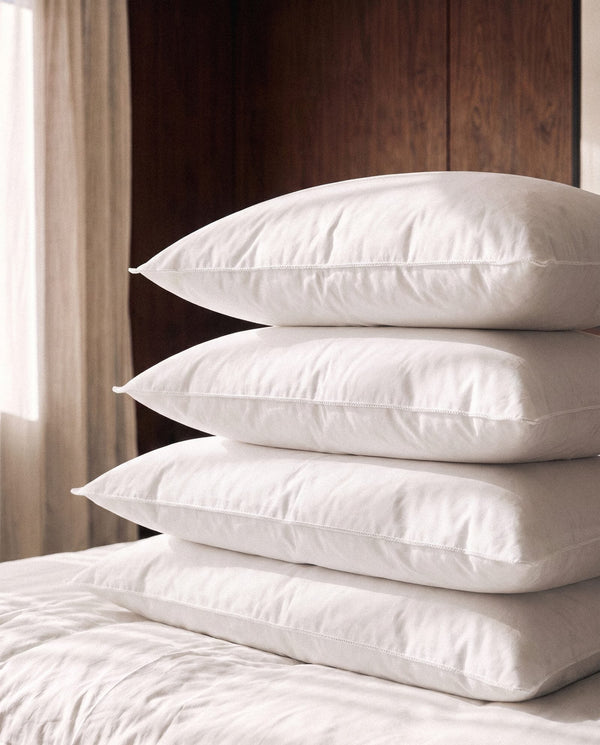
An allergy-friendly pillow is one you can wash at 60 °C at home, preferably with a fibre filling. A Funky Dream Hotel Pillow has a 100 percent cotton shell and is filled with siliconised hollow polyester fibre. It can be washed at 60 °C and keeps its shape wash after wash. It is the same pillow ESS Group's hotels make their beds with, in the 1,300 g version.
The pillow comes in 50×60, 50×90 Medium (1,100 g) and 50×90 High (1,300 g). To compare more models, see all our pillows.
Down or fibre for sensitive skin?
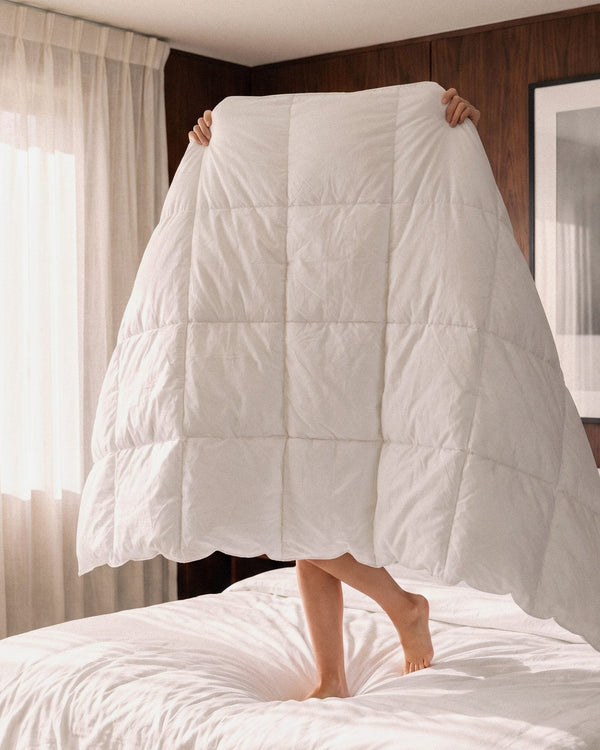
Neither material is medically better. Fibre is an easy-care choice if you want to wash your pillow and duvet often at home, down a choice if you want maximum lightness. A Funky Dream Hotel Duvet is filled with siliconised fibre, can be washed at 60 °C and comes in 150×210 and 230×220.
If you prefer down, our Sense of Satisfaction down products can also be washed at 60 °C, but down needs a longer drying time and thorough drying so it does not clump. We explain how in How to wash down and feathers, and the full comparison is in down and feathers or fibre.
Does OEKO-TEX mean bedding is allergy-friendly?
No. OEKO-TEX Standard 100 shows that the textile has been tested for harmful substances, from the fabric down to thread and buttons. It is not an allergy label and not a medical certification, but it is reassuring if you have sensitive skin.
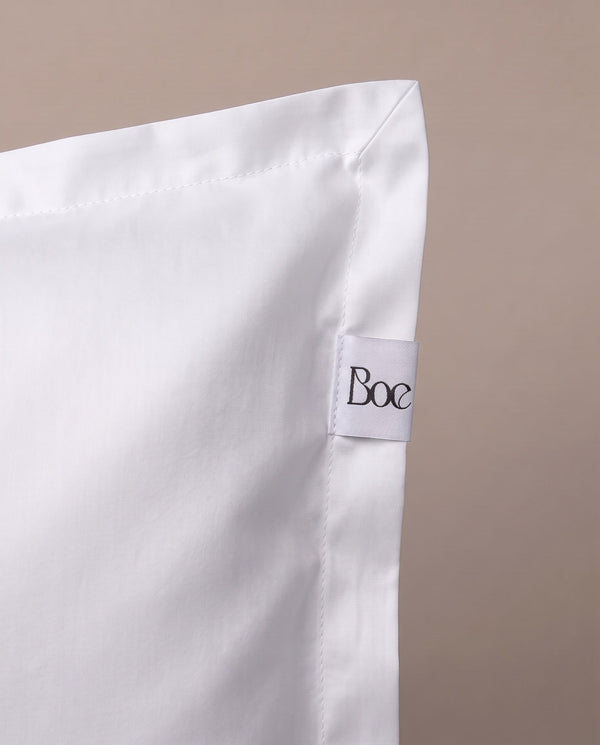
Our bedding sets Ralph in percale and Regency Lee in Supima cotton are OEKO-TEX certified. More on what the label means, and does not mean, is in our guide to OEKO-TEX certified bedding.
Which fabric suits sensitive skin best?
Cotton is the simplest choice next to the skin: a natural material that breathes, feels cool and can be washed at 60 °C again and again. Plain-woven percale gives a crisp, matte and airy surface. Ralph is woven in 100 percent cotton percale with 200 threads and is part of the percale collection. If you want something softer, Supima cotton is an alternative.
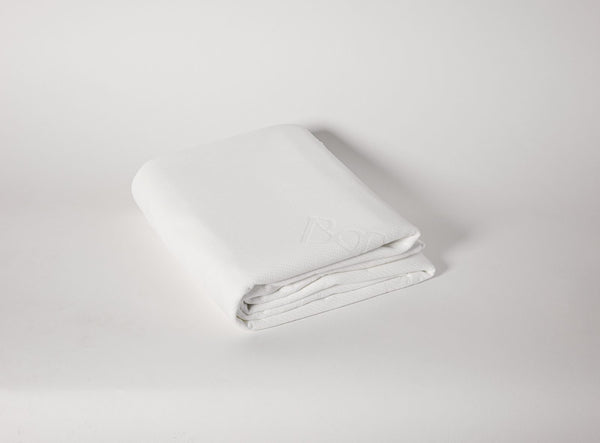
A mattress protector protects the mattress and is easy to wash, but check the care label: our Paisley Briggs mattress protector is polyester and is washed at 40 °C on a delicate cycle. It does not replace a special dust mite cover if your doctor has recommended one.
How to keep your bed allergy-friendly
- Choose bedding that handles 60 °C. Check the care label before you buy.
- Wash sheets and pillowcases every other week at at least 60 °C and rinse thoroughly.
- Wash the pillow and duvet every other month at at least 60 °C and let them dry completely.
- Air the bed every morning. Fold back the duvet so the moisture from the night can evaporate before you make the bed.
- Keep the bedroom cool and dry, with good ventilation and preferably below 45 percent humidity in winter.
- Have a spare set so the bed never has to wait for the laundry.
More washing advice is in bedding care advice and in our guide to how often to change your bedding.
Frequently asked questions
What does allergy-friendly bedding mean?
Bedding that handles regular washing at 60 °C, is easy to keep clean and is tested for harmful substances, for example to OEKO-TEX. It is about care and textile comfort, not medicine. No bedding cures or prevents allergies.
Which pillow is best for a dust mite allergy?
A pillow that can be washed at 60 °C, since both 1177 and the Swedish Asthma and Allergy Association advise it. A Funky Dream Hotel Pillow has a fibre filling and handles 60 °C. If you have symptoms, ask your doctor about dust mite covers.
How often should bedding be washed if you have allergies?
The Swedish Asthma and Allergy Association advises sheets every other week and duvet and pillow every other month, at at least 60 °C. Rinse thoroughly, as 1177 advises.
Is down worse than fibre for allergies?
Neither material is medically better. Fibre is easier to wash often at home, which is why many people with sensitive skin choose it. Down can also be washed at 60 °C but needs longer to dry.
Does OEKO-TEX mean a product is allergy-friendly?
No. OEKO-TEX Standard 100 shows that the textile has been tested for harmful substances. It is not an allergy label and not a medical certification, but it tells you what is not in the fabric.
Our advice
Think care before material. A bed you can wash at 60 °C without hesitating is the bed you actually keep clean. Start with the pillow and duvet, since they are washed least often and therefore matter most: A Funky Dream handles 60 °C and keeps its shape. Add cotton next to the skin, and keep a spare set so the bed is always made with something freshly washed.