






How to wash a down duvet and down pillow, step by step

Updated September 2026.
Short answer: wash a down duvet or down pillow in a large machine on a gentle cycle, at the temperature on the label (Boe's down products tolerate 60 °C), with a little mild detergent, no fabric softener and an extra rinse. Drying is what decides the result: tumble dry on low heat with dryer balls, in several rounds, until the filling is dry all the way through.
How often should you wash a down duvet?
Less often than you might think. With a duvet cover and pillowcase as protection, most people only need to wash the duvet itself once or twice a year, and the pillow a little more often since it rests against face and hair. In between, keep the down fresh by shaking and airing it. If you have a dust mite allergy, wash more often: the Swedish Asthma and Allergy Association, Astma- och Allergiförbundet, advises washing duvets and pillows every other month and says everything in the bed should be washable at 60 °C or more.
What temperature should down be washed at?
The temperature on the label, which takes precedence over any general advice. Down generally tolerates warm washing as long as the cycle is gentle and the rinse thorough. Here is how it looks for Boe's pillows and duvets:
| Product | Filling | Wash | Drying |
|---|---|---|---|
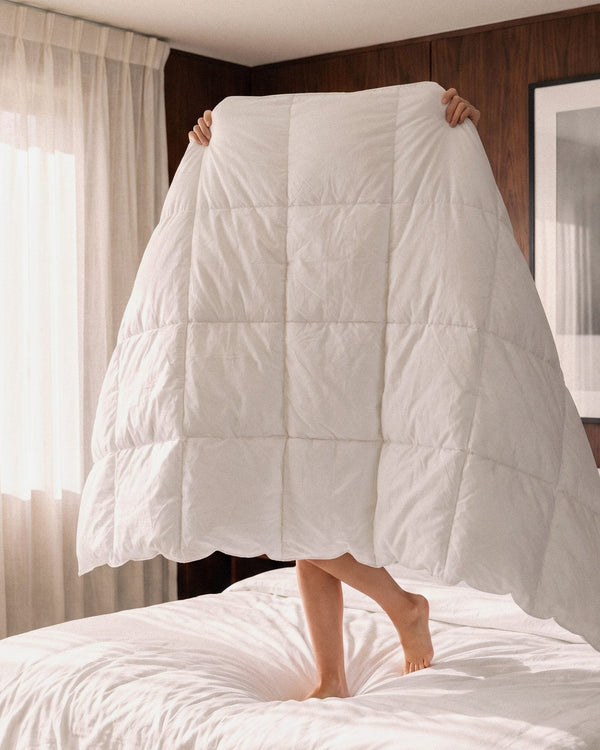
| Sense of Satisfaction Down Duvet | 60% duck down, 40% duck feather | 60 °C, gentle | Low heat, dryer balls, several rounds |
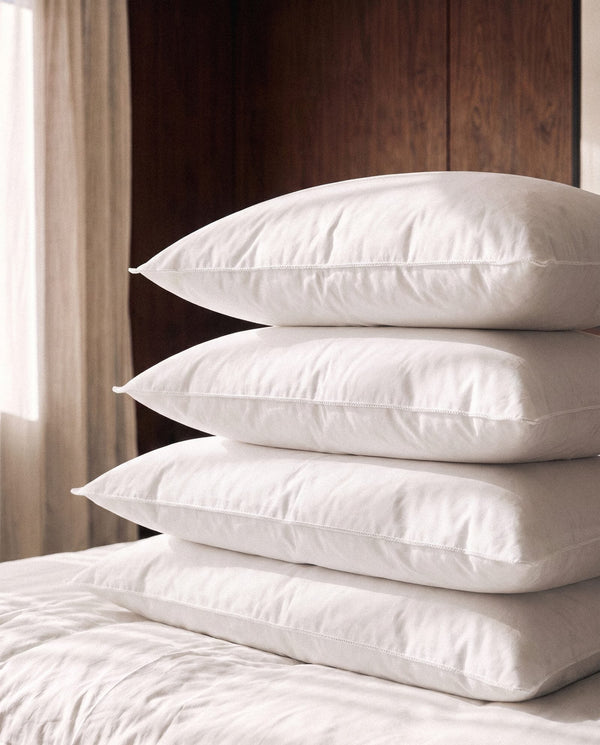
| Sense of Satisfaction Down Pillow | 60% duck down, 40% duck feather | 60 °C, gentle | Low heat, dryer balls |
| A Funky Dream pillow and duvet | Allergy-friendly fibre | 60 °C | Dry completely |
| Cody Lamont Feather Mattress Topper | 10% duck down, 90% duck feather | Not washable | Air and shake |
If you have a dust mite allergy, the Swedish health service 1177 recommends washing pillows and duvets at 60 °C regularly and rinsing them thoroughly.
How do you wash a down pillow?
The same way as the duvet, with two differences. Wash two pillows together so the drum stays balanced. And rinse generously: a pillow has dense filling that holds on to detergent deep inside. Drying also takes longer than you expect, so plan for several rounds in the dryer. A down pillow is soft and airy, a pillow with more feather is firmer and holds its shape, but the washing principle is the same. The difference between down and feather, and which to choose, is covered in our guide to down and feather.
Why shouldn't you use fabric softener on down?
Fabric softener coats the down and feathers so they stick together and lose their loft. The duvet gets heavier, flatter and insulates less well. Use a little mild detergent instead, ideally one made for down, and add an extra rinse so no residue stays in the filling.
How do you dry a down duvet so it doesn't clump?
This is where the result is decided. Damp down clumps, loses its airiness and can start to smell musty. Tumble dry on low heat with two or three dryer balls, which break up clumps as the drum turns. Take the duvet out at intervals, shake it well and pull clumps apart by hand. A large duvet can need three or four rounds. Feel the middle of the filling before making the bed: if it is the slightest bit damp, run another round. Without a dryer you can dry the duvet flat on an airy surface, but then turn and shake it often and allow a couple of days.
Can you wash a feather mattress topper?
No, not the Cody Lamont. It is large, densely filled with duck feather and cannot be washed. Look after it with three habits instead: shake and plump it often so the feathers spread evenly, air it in cool, dry air, and put a mattress protector under the fitted sheet. The protector is what you wash. How all the layers of the bed fit together is covered in Build the perfect bed layer by layer.
How to wash a down duvet
- Read the label and check the cover is intact. A small hole lets feathers out when the duvet is wet and heavy.
- Choose a large machine. The duvet should move freely in the drum. If yours is too small, use a larger one at a laundry room or laundrette.
- Run a gentle cycle at the label temperature, with a little mild detergent and no fabric softener.
- Add an extra rinse and spin at a calm speed.
- Tumble dry on low heat with dryer balls, in several rounds, shaking the duvet between each.
- Feel the middle of the filling and only make the bed when the duvet is dry all the way through.
Frequently asked questions
How often should you wash a down duvet?
Once or twice a year is enough for most people using a duvet cover. With a dust mite allergy, Astma- och Allergiförbundet recommends washing every other month. Shake and air the duvet in between.
What temperature should down be washed at?
The temperature on the label. The Sense of Satisfaction down pillow and duvet tolerate 60 °C on a gentle cycle. 1177 recommends 60 °C for pillows and duvets if you have a dust mite allergy.
Do you have to use dryer balls?
They are strongly recommended. Dryer balls break up clumps and fluff the filling as it dries. Without them you need to take the duvet out and shake it much more often.
Why does down clump after washing?
Almost always because it has not dried completely. Damp down sticks together. Dry in several rounds, shake in between and only make the bed when the filling is dry all the way through.
Can you wash a feather mattress topper?
The Cody Lamont feather mattress topper cannot be washed. Shake and air it regularly and protect it with a mattress protector, which you wash instead.
Our advice
Wash down rarely but properly, and spend your time on the drying. A well-kept down duvet keeps its loft for many years, and it is care, not age, that decides. If you are looking for a new one, we have duvets and pillows in down and in allergy-friendly fibre, and more care advice for the rest of the bed is in Bedding care.