





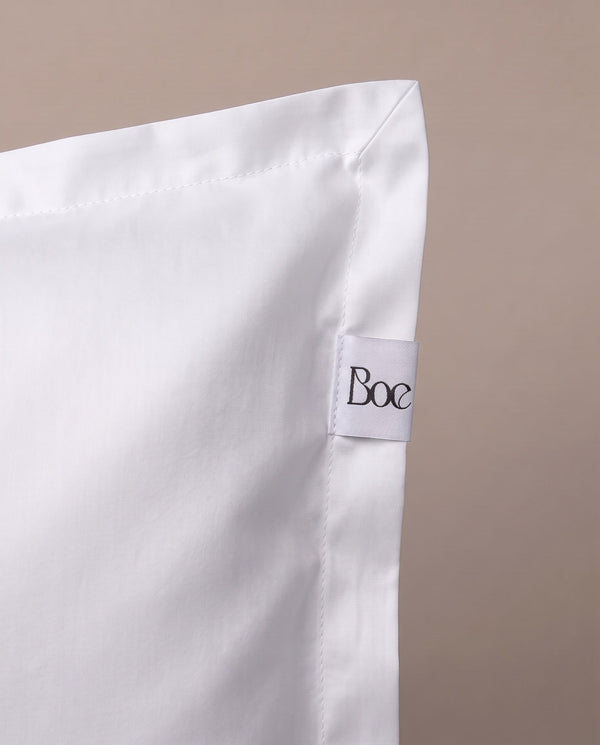
Down and feather: how to choose the right duvet and pillow

Updated September 2026.
Short answer: down gives warmth and lightness, feather gives support and structure. A down and feather duvet becomes lighter and warmer the higher its share of down. Choose plenty of down for your duvet, more feather where you want support, as in pillows and mattress toppers, and fibre if you would rather avoid bird filling or wash often.
What is the difference between down and feather?
Both down and feather come from birds, but they sit in different places and do different things. Down is the soft, three-dimensional clusters closest to the bird's body, with no hard quill. A feather has a stiff quill and a flat shape. The rule of thumb is simple: down warms, feather supports.
| Down | Feather | Fibre | |
|---|---|---|---|
| Feel | Light, airy, enveloping | Heavier, firm, springy | Full, even, resilient |
| Best for | Duvets | Supportive pillows, mattress toppers | Hotel pillow and hotel duvet, allergies |
| Warmth per gram | High | Low | Medium |
| Care | Wash with extra rinse, long drying | As down | Easy, washable at 60 °C |
What is down?
Down clusters are made up of thousands of fine filaments that grip each other in every direction and trap still air. It is the air, not the material itself, that insulates. The fluffiness is called loft and is the reason down can feel almost weightless while keeping you noticeably warm. A down duvet drapes softly over the body and breathes, so you rarely overheat. A factual description is available on Wikipedia.
What is feather good for?
Feather is heavier and firmer than down. The flat shape and the quill make feathers push back and hold their shape; they give support rather than lift. That is why feather belongs where you want structure: in pillows that keep the neck in place and in mattress toppers that give an even, soft base. The Cody Lamont Feather Mattress Topper has 90% duck feather and 10% duck down under a 100% cotton cover, ten centimetres of softness on top of the mattress. It is used at selected ESS destinations.
How do you choose a down and feather duvet?
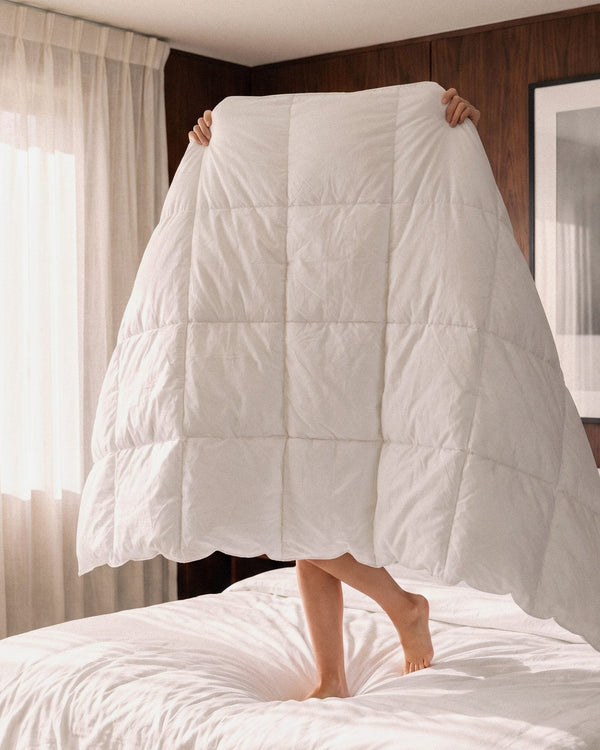
A down and feather duvet blends the two, and the share of down sets its character. More down gives a lighter, warmer duvet, more feather a heavier, cooler one. The fill amount and the duvet's warmth level then decide how warm it is.
The Sense of Satisfaction Down Duvet has 60% duck down and 40% duck feather in a 100% cotton cover. It comes in the warmth levels Cool and Warm in 150×210, and Cool, Medium and Warm in 230×220. Choose Cool if you sleep warm or have a warm bedroom, Warm if you get cold easily and Medium if you want an all-year duvet. Read more about warmth levels in How to choose the right duvet.
What does fill power mean on a down duvet?
Fill power (in Swedish "bärighet") indicates how much volume a given amount of down fills when it is allowed to expand freely. Higher fill power means the down traps more air per gram, and so more warmth for less weight. It is a general industry measure that is useful when comparing down duvets, explained in detail on Wikipedia. We do not state a fill power figure for our products, as we choose to describe the duvet by warmth level and filling.
Down pillow or feather pillow?
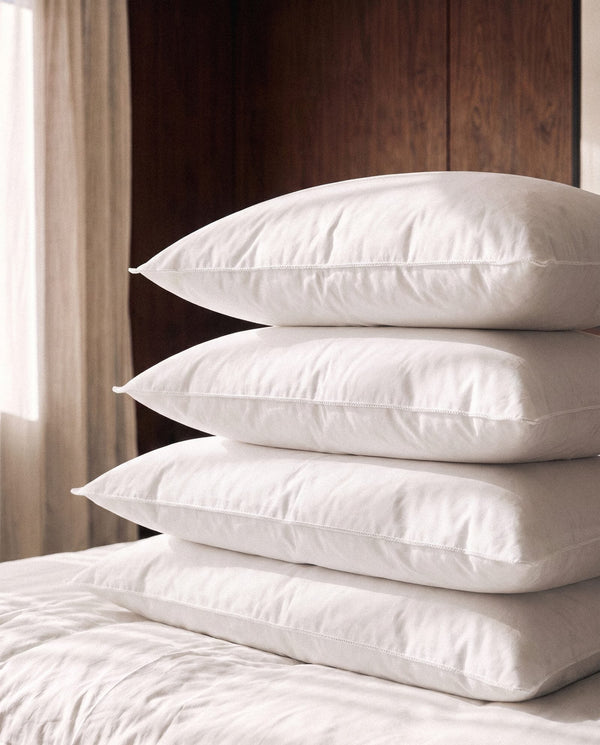
A pillow is more personal than a duvet, because the right choice depends on how you sleep. A soft down pillow suits stomach sleepers and anyone who wants something to sink into. A firmer pillow with more feather, or a fibre pillow, suits side sleepers who need support. The Sense of Satisfaction Down Pillow has the same filling as the duvet and comes in Low, Medium and High. The full reasoning by sleeping position is in The right pillow for your sleeping position.
Is there an alternative to down?
Yes. Not everyone wants to or can sleep in down. The A Funky Dream Hotel Pillow and the matching hotel duvet are filled with allergy-friendly siliconised fibre. The fibre is treated to become smooth and springy, giving soft volume without bird filling, and it can be washed at 60 °C. It is the pillow and duvet ESS Group's hotels make their beds with, precisely because they handle frequent washing and suit guests with allergies.
What should you consider about responsible down?
For many people it matters that down comes from birds that have been treated well. Look for the industry standard Responsible Down Standard (RDS), managed by Textile Exchange, which sets requirements across the whole supply chain, including a ban on live-plucking and force-feeding, with independent auditing. Always ask the seller about the origin of the down when you compare down products.
How to choose down, feather or fibre
- Start with the duvet. If you want lightness and warmth, choose a down and feather duvet with a high share of down.
- Choose the warmth level by how you sleep. Cool if you sleep warm, Warm if you get cold, Medium as an all-year duvet.
- Choose the pillow by sleeping position. A soft down pillow for stomach sleepers, firmer support for side sleepers.
- Add feather where you want support. A feather mattress topper adds softness on top of the mattress.
- Choose fibre if you have allergies or want to wash often. The fibre can be washed at 60 °C and contains no feathers.
Frequently asked questions
What is the difference between down and feather?
Down is the soft, round clusters closest to the bird's body and gives warmth, lift and lightness. A feather has a stiff quill and a flat shape and gives support, structure and spring. Put simply: down warms, feather supports.
What is a down and feather duvet?
A duvet that blends down and feather. The higher the share of down, the lighter and warmer it becomes. The Sense of Satisfaction Down Duvet has 60% duck down and 40% duck feather, a 100% cotton cover and comes in several warmth levels, from Cool to Warm.
What does fill power mean on a down duvet?
Fill power measures how much volume an amount of down fills when it expands freely. Higher fill power means more trapped air per gram and so more warmth for less weight.
Should I choose a down or a feather pillow?
If you want a soft, mouldable pillow, choose down, for example if you sleep on your stomach. If you need firmer support, as a side sleeper, choose a pillow with more feather or a full fibre pillow.
Is there a good alternative if you do not want down?
Yes. The A Funky Dream Hotel Pillow and Hotel Duvet are filled with allergy-friendly siliconised fibre that gives soft volume without bird filling and can be washed at 60 °C. They are the same pillow and duvet as at ESS Group's hotels.
Our advice
Let each material do what it does best. Down in the duvet for lightness and warmth, feather where you want support and fibre when you want to wash hot and often. If you are unsure about warmth, choose Medium; it suits most bedrooms all year round. How to wash down and feather without ruining the loft is covered in How to wash down and feather. All our duvets are under Duvets.