



The best bedroom temperature for good sleep: how the right bedding helps

Updated September 2026.
Short answer: the optimal bedroom temperature is around 18 °C for most adults. The Sleep Foundation gives about 18 °C as ideal and a range of roughly 16 to 20 °C. A cool room helps the body lower its temperature before sleep. What then decides whether you sleep well is the duvet and the bedding, which regulate the warmth closest to your skin.
There is a reason most people sleep best in a cool room. As evening turns to night, the body lowers its own core temperature, and a room a few degrees too warm can make it harder to relax and fall asleep. The question of the best bedroom temperature is therefore not only a matter of taste. It is linked to how the body prepares itself for sleep.
What is the best temperature to sleep in?
Around 18 °C. The American Sleep Foundation writes that the best room temperature for sleep is about 18.3 °C and that most doctors recommend a range of roughly 15.6 to 20 °C. The Swedish health service 1177 Vårdguiden also highlights coolness: a dark, quiet and cool bedroom makes it easier to fall asleep.
The figures are guidelines, not rules. What feels right differs between people, and age, nightwear and above all the duvet play a part. See 18 °C as a starting point to fine-tune from.
| Who | Guideline | Source |
|---|---|---|
| Most adults | about 18 °C, range 15.6 to 20 °C | Sleep Foundation |
| Infants | one or two degrees warmer, up to about 20.5 °C | Sleep Foundation |
| Older adults (one study) | slept best between about 20 and 25 °C | Sleep Foundation, on a study in the Journal of Thermal Biology |
Why do you sleep better in a cool room?
The body cools itself down before sleep, and a cool room works with that process rather than against it. According to the Sleep Foundation, core temperature starts to drop about two hours before you fall asleep, at the same time as the body releases the sleep hormone melatonin. Blood flow to the hands and feet increases, so heat is carried away from the body's core.
That explains a familiar habit: sticking a foot out from under the duvet when it gets too warm. The body actively seeks to shed excess heat. A room that is too warm forces the body to work to get rid of that heat, which can make it harder to settle. This is general information about the sleep environment, not medical advice. If you have persistent sleep problems, contact a healthcare provider.
Does the duvet matter more than the room?
Often, yes. Room temperature sets the frame, but the duvet decides the climate closest to your body. The Sleep Foundation describes a study where participants slept well as long as the temperature in the bed stayed around 30 to 33 °C, and where a warmer duvet gave a much wider range of comfortable room temperatures than a thin one (Sleep Foundation on duvets and bedroom temperature). The conclusion is practical: it is easier to change the duvet than to keep adjusting the thermostat.
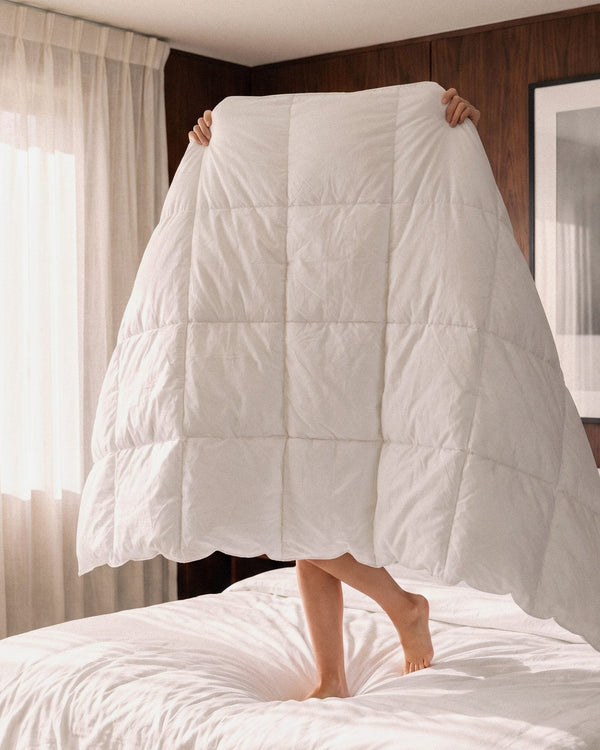
- Fibre duvet: the A Funky Dream Hotel Duvet is the duvet ESS Group's hotels make their beds with. Fluffy, cool and washable at 60 °C, good if you sleep warm.
- Down duvet: the Sense of Satisfaction Down Duvet in duck down and duck feather comes in Cool, Medium and Warm, so you can match the duvet to the room.
To understand the difference between down and fibre and how warmth levels work, read how to choose the right duvet.
Which bedding keeps you cool?
Tightly woven, airy cotton that breathes. Bedding lies closest to the skin and decides how moisture and heat are carried away during the night.
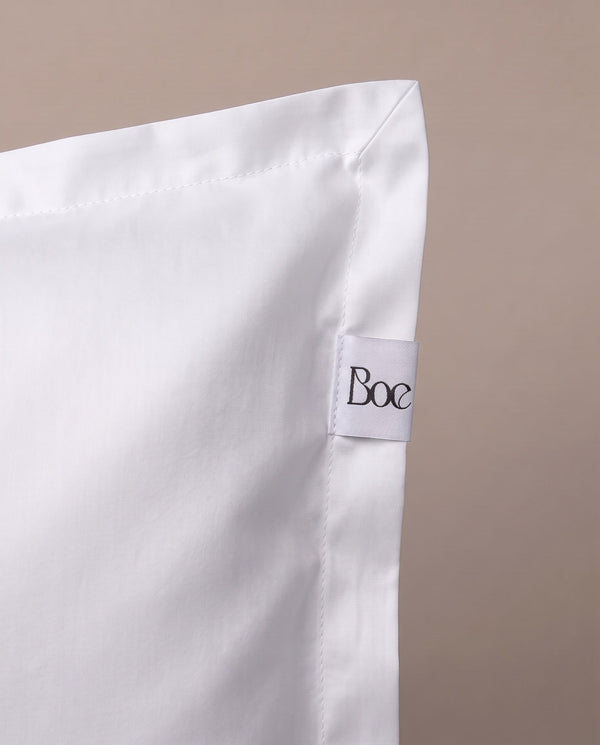
Percale is a tight, plain-woven cotton with a fresh, crisp and matte surface. It breathes and feels cool, which makes it a natural choice if you tend to get warm. Ralph is Boe's own bedding in crisp percale, 200 TC and OEKO-TEX certified. If you want something softer that still breathes, there is Regency Lee in long-staple Supima cotton. Dense synthetic blends next to the skin breathe less well, which we cover in natural materials or synthetics in bed.
How do I adapt the bedroom to the season?
Keep the room cool all year and let the duvet do the work. In summer, when nights are light and warm, most people benefit from cool percale and a lighter duvet. In winter, when the room is kept cool and the air is dry, switching to a warmer duvet is often enough instead of turning up the heat. We go through the whole switch in summer duvet or winter duvet.
How to get the right bedroom temperature
- Aim for about 18 °C and adjust one degree at a time based on how you sleep.
- Air the room before bed so it has time to cool down.
- Choose the duvet for the room: a cooler duvet in a warm room, a warmer one in a cold room.
- Choose bedding that breathes, such as percale, next to the skin.
- Keep the room dark and quiet too, as 1177 points out.
- Let bedding dry properly between washes for a fresh bed.
Frequently asked questions
What is the best bedroom temperature for sleep?
For most adults, around 18 °C. The Sleep Foundation gives about 18.3 °C as ideal and a range of roughly 15.6 to 20 °C. Use the figure as a starting point and fine-tune to what feels right for you.
Why do you sleep better in a cool room?
The body lowers its own core temperature before sleep by carrying heat away through the hands and feet. A cool room works with that process and can make it easier to fall asleep. This is general information, not medical advice.
What temperature should a baby's bedroom be?
The Sleep Foundation writes that infants may benefit from a room one or two degrees warmer, up to about 20.5 °C. Follow the advice of your child health clinic first.
Which bedding is coolest?
Cotton percale is a natural choice for a cool bed. The tight but airy weave breathes and carries moisture away, which feels fresh on warm nights.
Down or fibre duvet if I want to sleep cool?
Both work. Choose by warmth level rather than material. A fibre duvet is easy to wash, and a down duvet often comes in several warmth levels. In a cool room you can choose a warmer duvet and still sleep comfortably.
Our advice
Keep the bedroom around 18 °C and let the duvet do the rest. It is easier to change the duvet than to chase the right setting on the thermostat. If you sleep warm, start with a cool fibre duvet like the A Funky Dream Hotel Duvet and percale bedding. If you get cold, choose a down duvet in a warmer warmth level and keep the room cool.