





Summer bed vs winter bed: how to switch the bed by season
Updated September 2026.
Short answer: choose a cooler duvet and percale bedding in summer, and a warmer duvet in winter. The sheets can often stay the same all year, especially Supima cotton. The big difference between a summer bed and a winter bed lies in the warmth of the duvet and in the layers you add or remove. Keep the room cool all year and let the bed do the fine-tuning.
The bed is never quite the same in July as in January. As the seasons change, the climate under the duvet changes too, and with it the conditions for a calm night. A summer bed should carry heat away and feel cool against the skin. A winter bed should close in and keep the warmth without feeling heavy. Switching the bed over is not about starting again, but about changing the right piece at the right time.
Why does the bed need to change with the seasons?
Because the climate in the room changes while the body's needs stay the same. The body lowers its temperature before and during sleep, and a cool bedroom supports that. The Sleep Foundation gives about 18 °C as the best room temperature for sleep. In summer it is hard to keep the room that cool; in winter it is easy, but the air gets dry and cold.
Interestingly, the thermostat is not the only thing that matters. The Sleep Foundation describes a study where a warmer duvet gave a much wider range of comfortable room temperatures, while a thin duvet required a narrower and warmer environment (Sleep Foundation on duvets and bedroom temperature). That is why seasonal switching works: you do not adjust the house, you adjust the bed. More on the room itself in our guide to the best bedroom temperature.
Summer duvet or winter duvet: what is the difference?
Warmth. A summer duvet has less filling or a cooler warmth level and lets heat out; a winter duvet has more and holds it in. The material, down or fibre, matters less than the warmth level.
| Season | Duvet | Bedding | Layers |
|---|---|---|---|
| Summer | Cool or light duvet | Percale | As few as possible |
| Spring and autumn | Medium-warm duvet | Percale or Supima | Throw within reach |
| Winter | Warmer duvet | Supima or percale | Throw or bedspread |
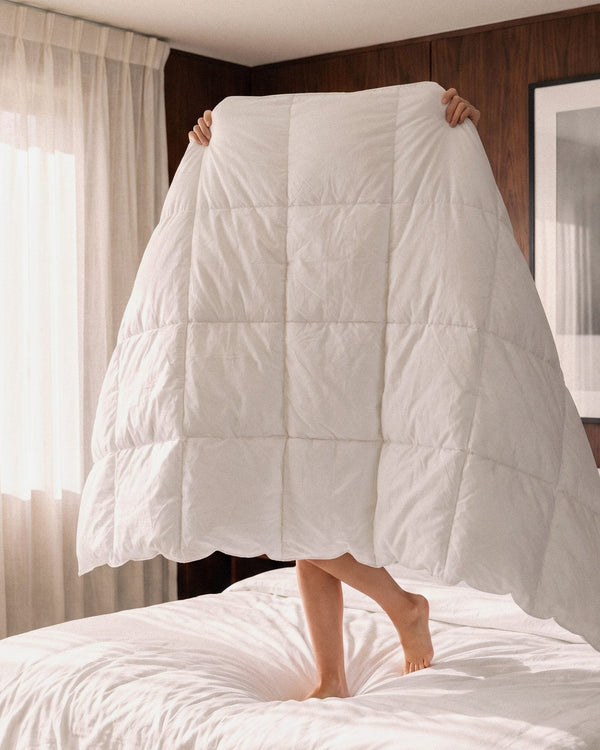
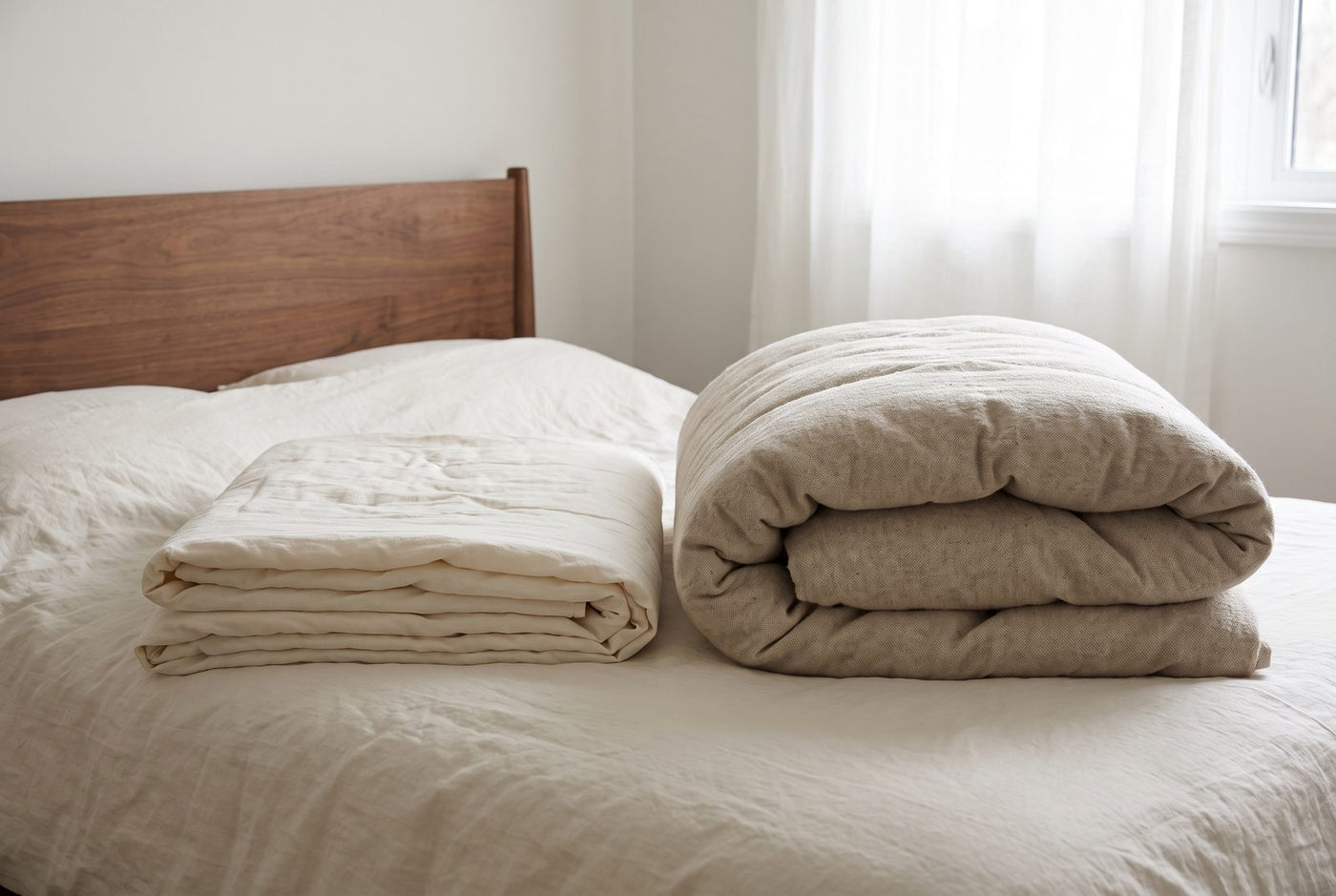
We offer the Sense of Satisfaction Down Duvet in duck down and duck feather in Cool, Medium and Warm, so you can have a cooler duvet in summer and a warmer one in winter. The A Funky Dream Hotel Duvet, the fibre duvet ESS Group's hotels make their beds with, is fluffy and cool and washable at 60 °C. The full walkthrough of warmth levels is in how to choose the right duvet.
Which bedding is coolest in summer?
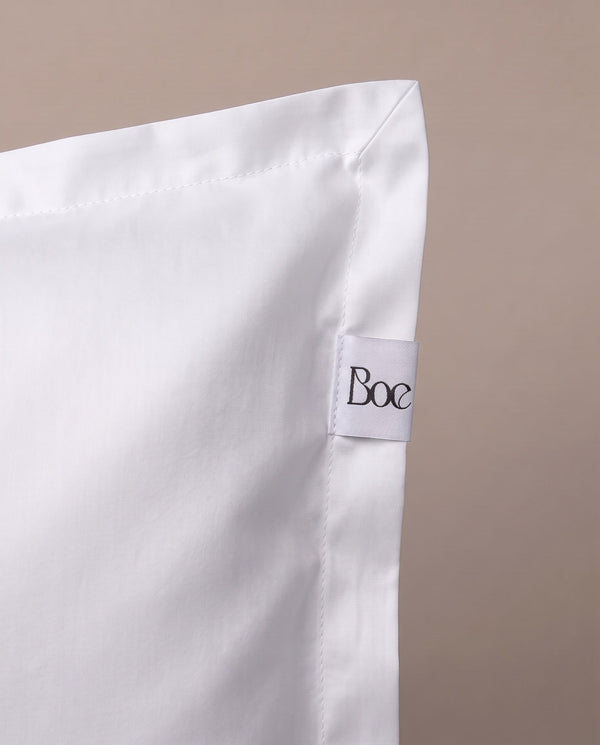
Percale. The tight, plain weave gives a crisp, matte and airy surface that breathes well. Ralph is Boe's own bedding in crisp percale, 200 TC and OEKO-TEX certified, and feels fresh rather than warm on mild nights. See the full range in percale.
Can I use the same bedding all year?
Yes. Supima cotton is a good year-round base. Regency Lee in Supima, 300 TC, has a soft, slightly closer surface with a discreet sheen. It is softer against the skin than percale but still breathes, cool enough for summer in an airy room and enveloping when it is cold. Then you switch the duvet and layers rather than the bedding itself.
- Cool, crisp summer bed: percale, for example Ralph.
- Soft year-round base: Supima, for example Regency Lee.
- Winter feeling: keep the bedding and build warmth with the duvet and layers.
How do I use layers between seasons?
Add when it cools down and remove when it warms up. Between high summer and midwinter lie months of changing weather, and that is when layers are most useful.
- Throw or bedspread: add on cool evenings, fold away when the night is warm.
- Pillowcases in the right weave: cool percale near the face makes a difference on warm nights.
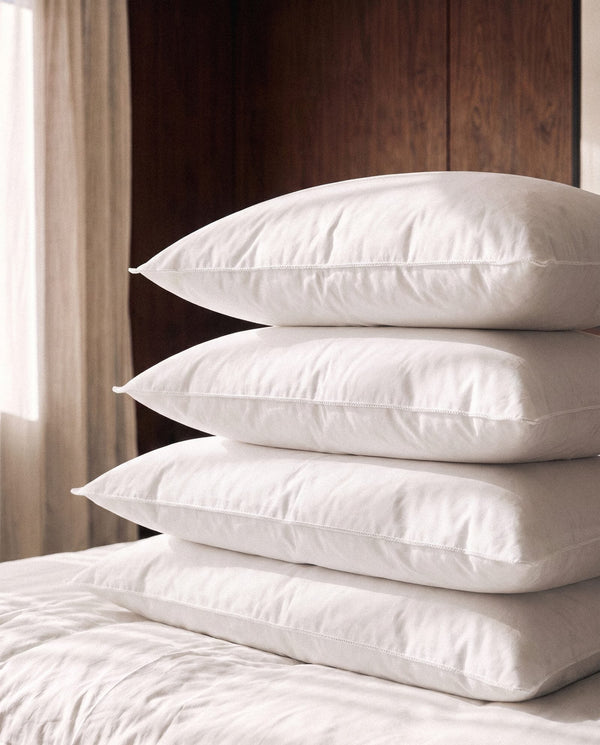
- Pillow: a pillow that can be washed at 60 °C, like the A Funky Dream Hotel Pillow, is easy to keep fresh through sweaty summer nights.
If you want to build the bed systematically, the whole method is in making the bed layer by layer.
How to switch the bed over
- Change the duvet by warmth: cooler for summer, warmer for winter.
- Choose bedding: percale for summer, or keep Supima as a year-round base.
- Adjust the layers: a throw on when it cools, off when it warms.
- Keep the room cool: air it before bed and let the bed do the rest.
- Wash and store: wash the season's duvet according to the care label and store it clean, dry and airy until you need it again.
When every piece has its season, the switch becomes a short, almost restful routine twice a year.
Frequently asked questions
What is the difference between a summer bed and a winter bed?
A summer bed carries heat away and feels cool, ideally with percale and a lighter duvet. A winter bed keeps the warmth with a warmer duvet and more layers. The difference lies mainly in the warmth of the duvet and the layers, not in changing the whole bed.
Do I need a summer duvet and a winter duvet?
It is the easiest way to sleep well all year, especially if the room gets warm in summer. A medium-warm duvet can be enough all year if you add a throw in winter.
Which bedding is coolest for summer?
Percale is coolest. The tight, plain weave gives a crisp, matte and airy surface that breathes well, for example Ralph in 200 TC percale.
Can I use the same bedding all year?
Yes. Supima cotton, like Regency Lee in 300 TC, works as a soft year-round base. Then you switch the duvet and layers by season instead of the bedding.
How cold should the bedroom be?
The Sleep Foundation gives about 18 °C as best for most adults. Keep the room cool and airy and let the duvet fine-tune by season.
Our advice
Put your energy into the duvet, not the thermostat. A cooler duvet in summer and a warmer one in winter does more for your sleep than changing everything else. The bedding can often stay: percale if you sleep warm, Supima if you want a soft year-round base. Start with the right warmth level among our duvets, and the rest follows.