





Swedish bed sizes: how sheets, duvet covers and pillowcases work
Updated September 2026.
Short answer: the most common Swedish duvet cover is 150×210 cm for a single duvet. For a double duvet there are three common sizes: 220×220, 230×220 and 240×220 cm. Pillowcases are usually 50×60 cm, and 50×90 cm for the longer hotel pillow. Always measure the duvet and the pillow, not the bed, because the cover and the pillowcase should follow what goes inside them.
Few things affect a night's sleep as quietly and as clearly as bedding in the right size. A duvet cover a few centimetres too short rides up at your feet, a pillowcase that is too big lets the pillow slide around, and a fitted sheet without enough depth pops off the corner of the mattress in the middle of the night. The good news is that Swedish bedding sizes follow a fairly logical system. This guide walks through the sizes, how they relate and how to choose. The exact sizes of our products are always in the size guide.
What sizes do duvet covers come in in Sweden?
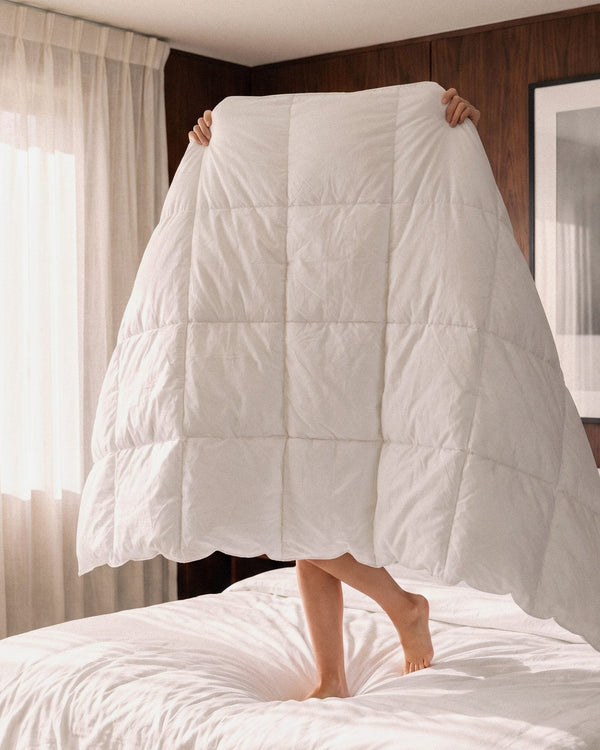
The duvet cover follows the duvet, not the bed. The Swedish standard for a single duvet is 150×210 cm, and it is what most Swedish homes make their beds with. Two people in the same double bed often sleep under a single duvet each with a cover each, a very Swedish way of making the bed that gives everyone their own climate through the night.
| Duvet | Duvet cover | Comment |
|---|---|---|
| Single 150×210 | 150×210 cm | The classic Swedish size. |
| Single 150×200 | 150×200 cm | Slightly shorter, common at IKEA. |
| Double 220×220 | 220×220 cm | Square, common with many Swedish brands. |
| Double 230×220 | 230×220 cm | A little wider, the same size as a UK king. |
| Double 240×220 | 240×220 cm | The widest common size, used by IKEA among others. |
The rule of thumb is simple: measure the duvet, not the bed. A duvet cover should fit snugly without being tight. Too big, and the duvet shifts inside and the bed looks unfinished; too small, and the filling is compressed and the duvet loses its loft.
How big is a standard duvet cover?
A standard Swedish duvet cover is 150×210 cm. It fits a single duvet of the same size. If you sleep in a double bed under one shared duvet, the double size applies, and it is worth checking the width of your duvet, since 220, 230 and 240 cm all occur.
Our bedding sets come in the two sizes we think cover most beds: the Ralph bedding set in crisp percale and the Regency Lee bedding set in soft Supima cotton both come in 150×210 and 230×220 cm. The duvet in the same sizes, the A Funky Dream Hotel Duvet, also comes in 150×210 and 230×220 cm.
Bed sizes: the foundation
Swedish beds are almost always 200 cm long, and the width decides the category. Single beds usually come in 80, 90, 105 and 120 cm, with 90 cm the most common. Double beds usually start at 140 cm and go through 160 up to 180 cm, which many see as the classic Scandinavian double bed, often two 90 cm beds side by side. For tall people there are also 210 cm long beds. A comparative overview of bed sizes is available from KungSängen.
What size are pillowcases?
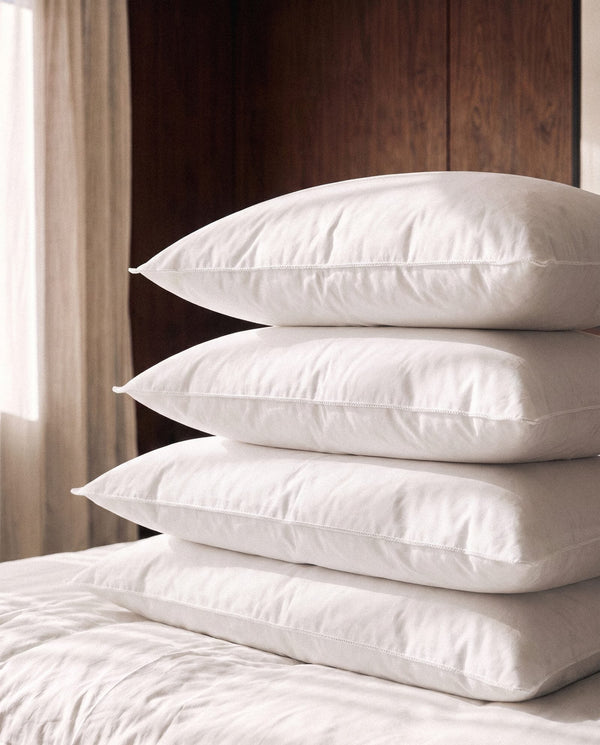
The pillowcase should follow the pillow, and two sizes dominate Swedish bedrooms: 50×60 cm, the classic Swedish pillowcase, and 50×90 cm, the oblong format hotels use for their pillows. You will also see 65×65 cm, a larger square format that makes a full-looking bed.
- 50×60 cm: the most common pillowcase in Swedish homes. Available as the Ralph pillowcase and the Regency Lee pillowcase.
- 50×90 cm: the hotel format. Fits the A Funky Dream Hotel Pillow in 50×90, the pillow ESS Group's hotels make their beds with.
- 65×65 cm: square, usually as a decorative back layer against the headboard.
What matters most is that the pillowcase matches the pillow. A 50×60 pillow in a 50×90 pillowcase will look loose and empty. See the full range of pillowcases.
Flat sheets and fitted sheets: what keeps the bed in place
The sheet closest to the mattress comes in two main types, and the choice is mostly a matter of taste.
Fitted sheet
A fitted sheet has elastic around the edge and is pulled down over the mattress. It stays put and smooth. Here the width and depth of the mattress decide: a fitted sheet for a thin mattress fits poorly if you have a thick mattress topper on top. The Ralph fitted sheet comes for 160 and 180 cm wide beds.
Flat sheet
A flat sheet is a rectangle without elastic that is tucked in under the mattress. It suits different mattress depths and gives the crisp, hotel-made look, but takes a little more care when you make the bed. Choose it a few centimetres larger than the mattress so there is enough to tuck in. Our flat sheets, Ralph and Regency Lee, come in 160×270 cm for the single bed and 240×270 cm for the double bed.
Mattress topper and mattress protector
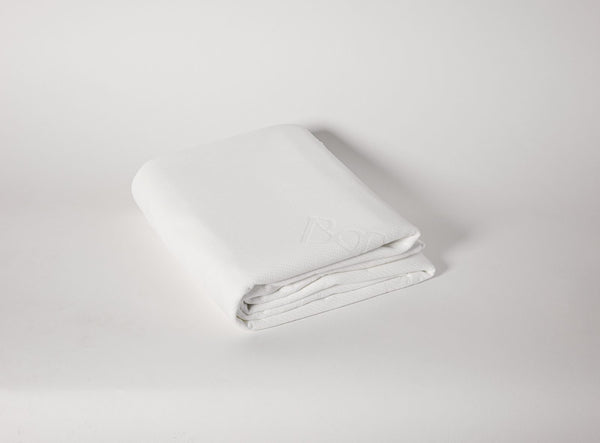
The mattress topper follows the size of the bed. The Cody Lamont feather mattress topper comes in 160×200 and 180×200 cm and is 10 cm high, which you should factor in when choosing a fitted sheet. A mattress protector protects the topper and comes in more widths: the Paisley Briggs mattress protector in 90, 105, 120, 160 and 180×200 cm.
Boe's sizes at a glance
| Product | Sizes |
|---|---|
| Duvet covers and bedding sets (Ralph, Regency Lee) | 150×210 and 230×220 cm |
| Duvet (A Funky Dream, Sense of Satisfaction) | 150×210 and 230×220 cm |
| Pillowcases | 50×60 and 50×90 cm |
| Pillow (A Funky Dream) | 50×60 and 50×90 cm |
| Flat sheets | 160×270 and 240×270 cm |
| Fitted sheets | 160 and 180 cm |
| Mattress topper | 160×200 and 180×200 cm, 10 cm high |
| Mattress protector | 90, 105, 120, 160 and 180×200 cm |
Buying bedding for a bed in another country? Then the sizes differ, which we cover in Swedish and European bedding sizes.
How to choose the right size
- Measure the duvet for the cover: one or two single duvets (150×210) or a double duvet (220, 230 or 240 × 220).
- Measure the pillow for the pillowcase: 50×60 or 50×90 are the most common.
- Measure the width and depth of the mattress for the sheet, and include the height of the topper if you have one.
- Decide how you sleep in the double bed: a duvet each or one large shared duvet.
- Choose the material last. Crisp percale or soft Supima, read more in percale or Supima.
To build the whole bed in the right sizes at once, you can build your bed step by step, and in making the bed layer by layer we go through the order.
Frequently asked questions
What size is a standard Swedish duvet cover?
The most common Swedish duvet cover is 150×210 cm and fits a single duvet of the same size. For a double duvet, 220×220, 230×220 and 240×220 cm are common. Always measure the duvet, not the bed.
What size is a standard pillowcase in Sweden?
The classic Swedish pillowcase is 50×60 cm. For the longer hotel pillow, 50×90 cm is used, and 65×65 cm appears as a larger square format. The pillowcase should follow the size of the pillow.
What is the difference between a fitted sheet and a flat sheet?
A fitted sheet has elastic and is pulled over the mattress for a secure fit, chosen by the width and depth of the mattress. A flat sheet has no elastic, is tucked in under the mattress and suits more mattress depths.
Do we need one or two duvet covers for a double bed?
It depends on the duvet. If you sleep under a single duvet each, you need two covers in 150×210 cm. If you share one double duvet, one cover in a double size, for example 230×220 cm, is enough.
Does a 230×220 duvet cover fit a 220×220 duvet?
Yes, it works. The cover is 10 cm wider than the duvet and hangs a little more loosely. The other way round, a cover that is too small, compresses the filling and should be avoided.
Where can I find the exact sizes of your products?
The exact sizes are on every product page and collected in the size guide. The sizes in this guide are common Swedish standard sizes and serve as guidance.
Our advice
Start from the duvet and the pillow, not the bed. If you have two single duvets, 150×210 is the only size you need; if you share one duvet, check the width before you order, since three double sizes live side by side. If you are unsure about the pillow, choose 50×90: it is the hotel format and gives the full bed many people miss at home. Start with a bedding set in the right size, and the rest follows.