



Percale or Supima: How to Choose the Right Bedding
Updated September 2026.
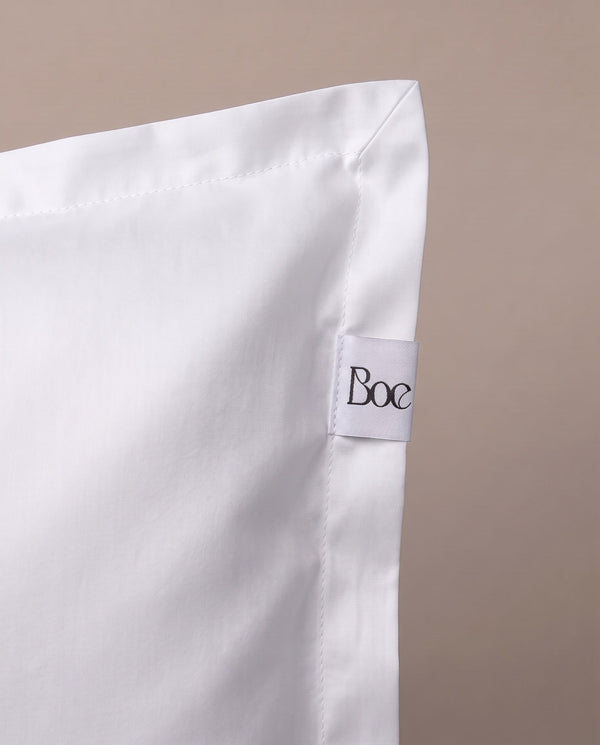
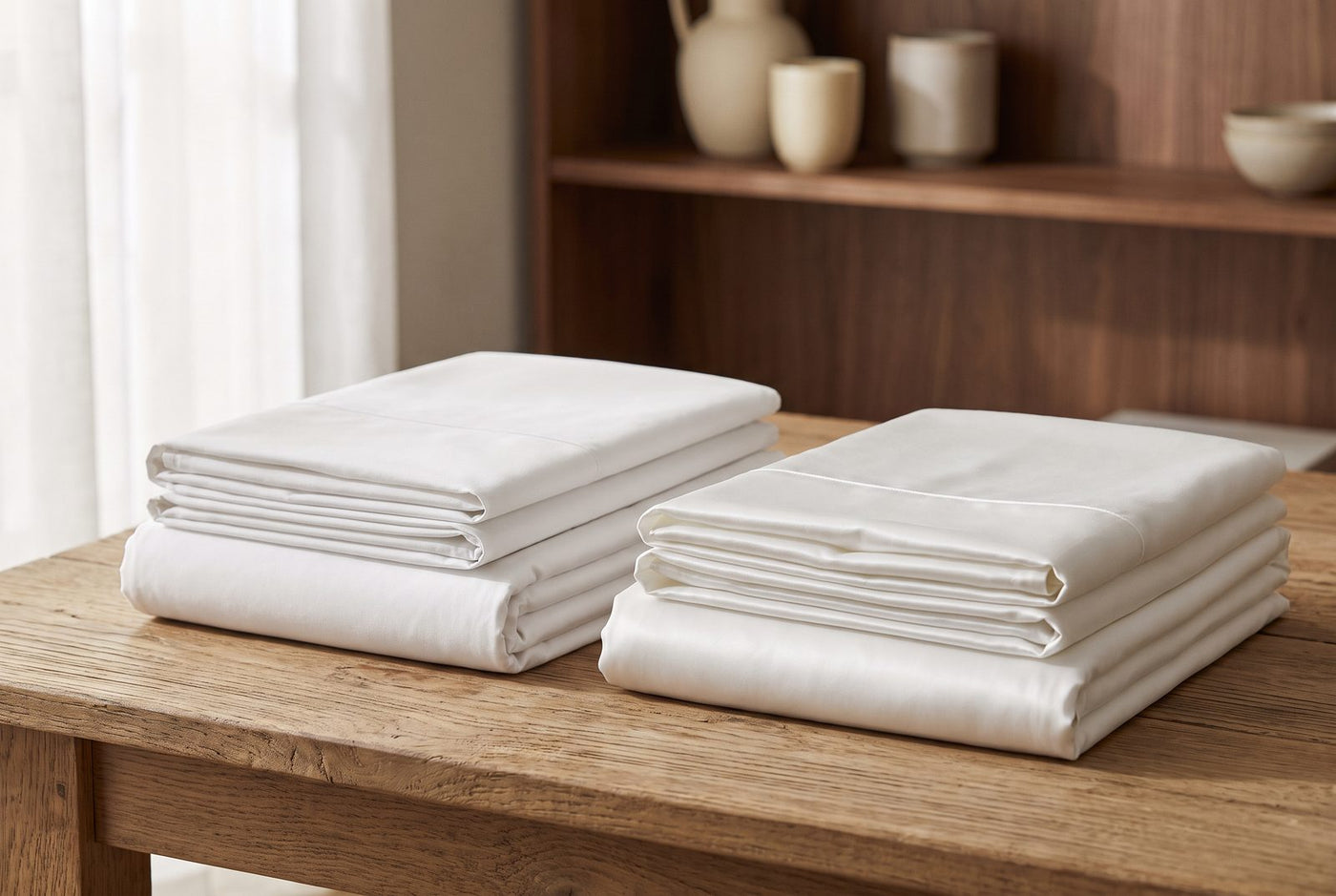
Short answer: choose percale if you sleep warm and like a crisp, cool, matte surface against your skin. Choose Supima if you want the softest cotton there is, with a gentle sheen. Ralph is Boe's percale at 200 TC and Regency Lee is Boe's Supima cotton at 300 TC, both OEKO-TEX certified. Neither is finer than the other; they are made for different ways of sleeping.
What is the difference between percale and Supima?
Percale is a way of weaving, Supima is a kind of cotton. That is why they are so often compared even though they answer different questions: percale describes how the threads cross, Supima describes which fibre the thread is spun from.
Percale is a tight plain weave where each thread goes over one and under one. The surface is matte, smooth and dry against the skin, and the fabric breathes. Supima is a protected trademark for American Pima cotton with extra-long fibres. According to Sunspel, Supima fibres average nearly twice the length of other cotton, and Supima makes up less than 1 percent of the world's cotton. Longer fibres give a smoother, stronger yarn and a soft surface with a natural sheen.
| Percale (Ralph) | Supima (Regency Lee) | |
|---|---|---|
| What it is | Weave: tight plain weave | Fibre: American extra-long-staple cotton |
| Feel | Crisp, cool, matte | Soft, smooth, with a slight sheen |
| Thread count at Boe | 200 TC | 300 TC |
| Suits you if you | sleep warm or like a firm, freshly pressed feel | want the softest and like a heavier drape |
| Washing | 60 °C | 60 °C, line dry |
| Certification | OEKO-TEX | OEKO-TEX |
Which is cooler to sleep in?
Percale. The even over-one-under-one weave leaves small, regular gaps that let air through, and the matte surface lies against you without feeling clammy when it gets warm under the duvet. If you sleep warm, or turn your pillow to find the cool side, percale is the natural choice.
Supima is not warm in itself; cotton breathes either way. But a smoother, denser surface sits closer to the skin and feels more enveloping. Many people who get cold easily like Supima in winter for exactly that reason. Read more about letting the bed follow the seasons in summer bed or winter bed.
Which is softest?
Supima. The long fibres leave fewer loose fibre ends along the thread, and those ends are what make ordinary cotton slightly rough. The result is a smooth, soft surface that often gets softer still after the first washes.
Percale is soft too, but in a different way: it feels clean and firm, like a good freshly pressed shirt. It softens over time without losing its crispness. To understand why Supima counts among the finest cotton in the world, read Supima cotton: why it is considered the finest.
Does thread count matter when choosing?
Less than you might think. Thread count is the number of threads per square inch, and higher is not automatically better. Percale is made for a moderate count: around 200 the weave keeps its coolness and crisp drape. Supima's long fibre carries a slightly higher density, which is why Regency Lee is woven at 300 TC. So do not compare the numbers directly between the two; choose the feel first. The full reasoning is in Thread count explained.
How do they last over time?
Both are made to be washed often. Ralph and Regency Lee can be washed at 60 °C, and both are certified to OEKO-TEX Standard 100, which means the textile is tested for harmful substances. Percale gains a softer, lived-in surface over the years. Supima keeps its sheen for a long time thanks to the strong fibre, and rewards a little care: line dry rather than tumble dry hard, and skip fabric softener, which coats the fibre. More advice in our bedding care guide.
How to choose
- Think about how warm you sleep. Warm or sweaty at night: percale. Get cold easily: Supima.
- Decide on the feel. Crisp, matte and freshly pressed: percale. Soft, smooth and slightly lustrous: Supima.
- Choose the bedding set first. The duvet cover and pillowcases are what you feel most. Start there and add the rest.
- Match the sheet. A flat or fitted sheet in the same material makes the whole bed feel the same.
- Unsure? Have one of each. Many people switch: percale in summer, Supima when it gets cold.
Frequently asked questions
Is percale or Supima better?
Neither is better in itself. Percale is crisp, cool and matte and suits you if you sleep warm. Supima is soft with a slight sheen and suits you if you want the softest. Both are high quality; the choice is about feel.
Is Supima a weave?
No. Supima is a cotton fibre, American Pima cotton with extra-long fibres, sold under a protected trademark. Percale, on the other hand, is a weave. Supima can in principle be woven in several ways, including as percale.
Which is cooler, percale or Supima?
Percale. The tight but airy plain weave lets air through and gives a matte surface that does not feel clammy. Supima breathes too, but feels softer and more enveloping.
What thread count do Boe's percale and Supima have?
Ralph is percale at 200 TC and Regency Lee is Supima cotton at 300 TC. Both are OEKO-TEX certified and can be washed at 60 °C.
Does percale get softer over time?
Yes. Percale softens with every wash but keeps its crisp, firm character. Avoid fabric softener, which dulls the matte surface.
Our advice
Choose by how you sleep, not by numbers. If you get warm at night, crisp percale is right; Ralph in percale comes as a bedding set, flat sheet, fitted sheet and pillowcases. If you want the softest, choose Regency Lee in Supima cotton. And if you want the hotel feeling all the way, start with the pillow and duvet; what the hotels themselves use is in Best bedding 2026.