




Build the Perfect Bed Layer by Layer: The Complete Guide
Updated September 2026.
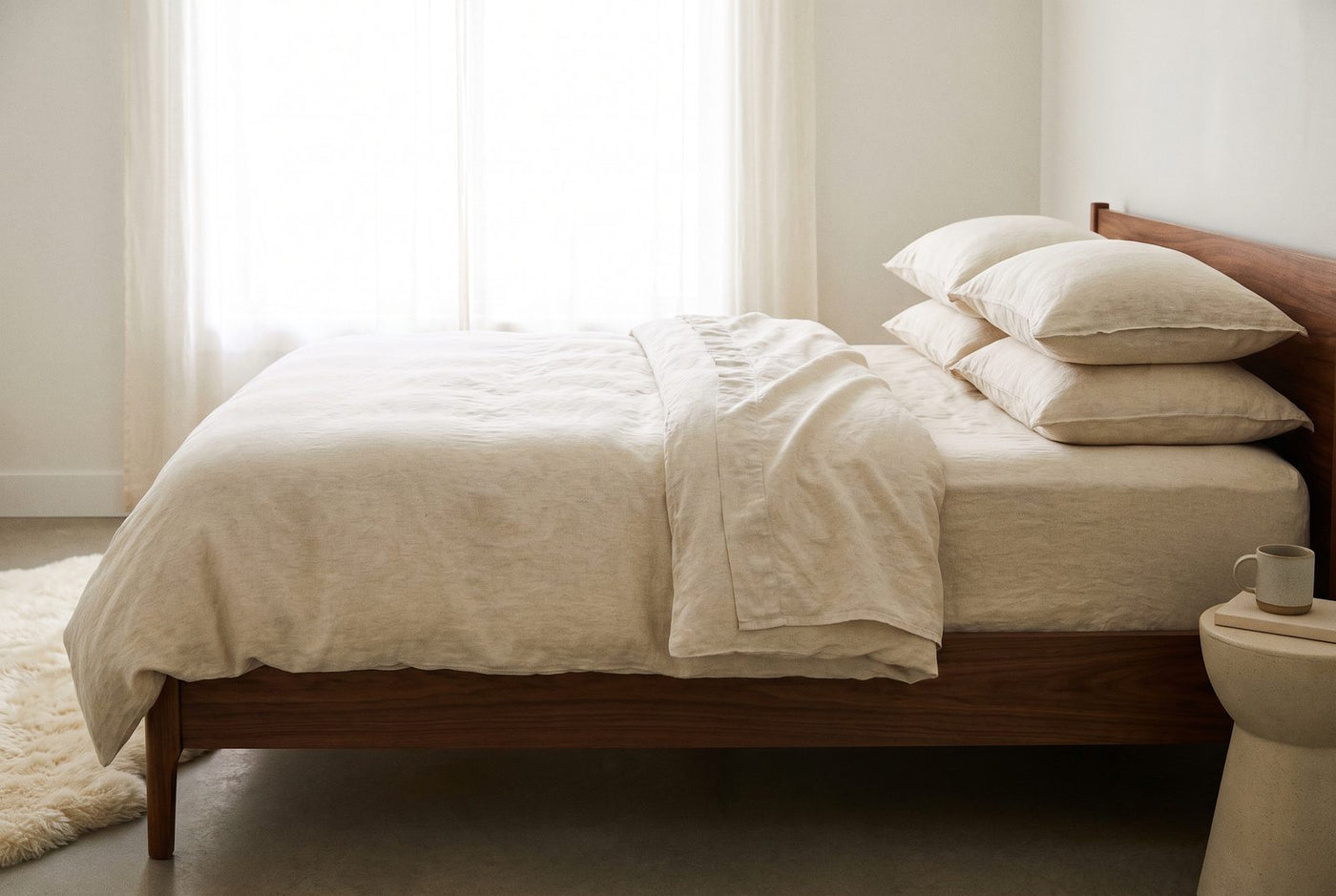
Short answer: a perfect bed is built from the bottom up in six layers: mattress topper, mattress protector, flat sheet, duvet with cover, pillows with pillowcases and finally a throw or bedspread. Each layer is laid smooth and taut before the next goes on. It is the order and the final touches that create the hotel feeling, not one expensive purchase.
A truly comfortable bed is not something you stumble upon. It is built, from the right bedding in the right order, and each layer does its own job. This guide walks through the whole build so you can follow along and make the bed at the same time.
Which layers does a perfect bed need?
Six layers, and none of them is superfluous. This is the build:
| Layer | Job | Washing |
|---|---|---|
| 1. Mattress topper | Softness and the deep, enveloping feel | Aired and shaken, not washed |
| 2. Mattress protector | Protects the topper from moisture and dirt | Washed regularly |
| 3. Flat sheet | The smooth, cool surface you lie on | Every week, 60 °C |
| 4. Duvet and cover | Warmth without weight | Cover every other week, duvet regularly |
| 5. Pillows and pillowcases | Neck support and height in the bed | Pillowcases every week |
| 6. Throw or bedspread | Frames the bed | As needed |
Layer 1: The mattress topper, the soft middle layer
Everything starts with the topper. More than anything else, it creates the feeling of sinking into the bed, a soft layer between you and the mattress that turns a good base into a truly comfortable one.
The Cody Lamont Feather Mattress Topper is our soft middle layer: 10 centimetres deep, with a 100% cotton cover and a filling of 90% duck feather and 10% duck down. It is used at selected ESS destinations. Lay it centred on the mattress and give it a few minutes to settle before you continue. This is the layer that makes the bed feel deep rather than flat.
Layer 2: The mattress protector, the layer you do not see
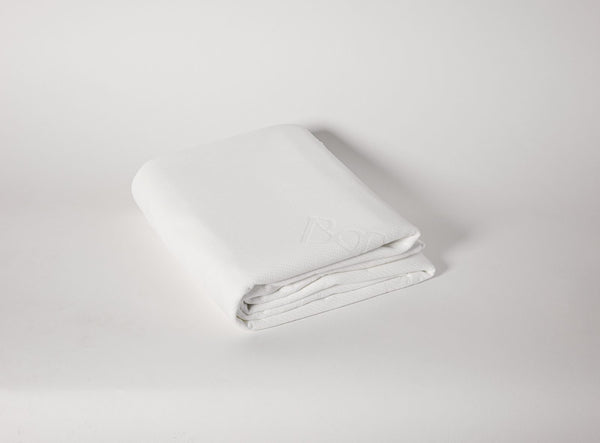
The mattress protector goes on top of the topper. The topper lies closest to you and takes up moisture during the night, and a feather topper cannot be washed. The protector keeps it clean and is easy to remove and wash separately.
Our Paisley Briggs Mattress Protector is washed on a 40 °C delicate cycle and comes in widths from 90 to 180 centimetres. Choose the same width as the topper and lay it smooth and taut so it does not wrinkle under what goes on top. We explain the difference between the two layers in Mattress protector and mattress topper.
Layer 3: The flat sheet, the crisp surface
Now comes the layer you actually lie on. It should sit smooth, taut and without creases, and this is where much of the hotel feeling is won or lost. Two weaves dominate at the finer end:
- Percale is the crisp, cool, matte weave. Our Ralph Flat Sheet in percale (200 threads) is for you who like it cool and sharp.
- Supima cotton gives a soft surface with a natural sheen. The Regency Lee Flat Sheet in Supima (300 threads) is the softer alternative.
To go deeper, see Percale or Supima and Supima cotton. Stretch the sheet firmly and fold hospital corners at the foot end.
Layer 4: Duvet and duvet cover
The duvet is the heart of the bed. It should warm without weighing you down and feel airy rather than compact. Choose by how warm you sleep:
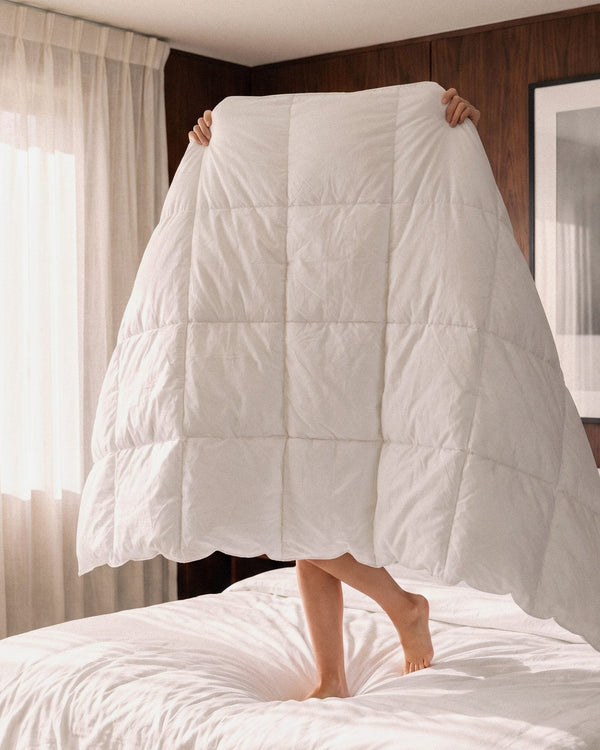
- The A Funky Dream Hotel Duvet is the fibre duvet ESS Group's hotels make their beds with: fluffy, cool and washable at 60 °C.
- The Sense of Satisfaction Down Duvet is for you who prefer down: 60% duck down and 40% duck feather in a cotton cover, light and warm.
Dress the duvet in a cover in the same weave as the sheet for a cohesive feel. A bedding set makes it easy. How to choose between down and fibre is covered in Down and feather.
Layer 5: Pillows and pillowcases
Pillows give both comfort and the height that makes a bed inviting. Think in two functions: the pillow you sleep on, and the pillow that builds fullness at the back.
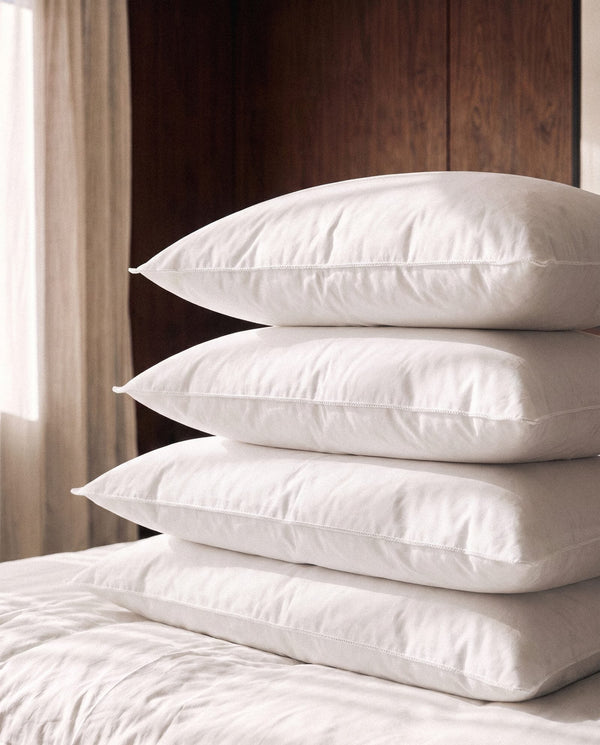
- The A Funky Dream Hotel Pillow is the high, firm hotel pillow, in 50×90 at 1,300 or 1,100 g, or in 50×60. It stands up against the headboard and gives the bed its silhouette.
- The Sense of Satisfaction Down Pillow is soft and yielding, in Low, Medium and High, for you who want the pillow to mould to your head.
The right pillow depends on how you sleep, see the right pillow for your sleeping position. Dress the pillows in pillowcases that match the bed.
Layer 6: Throw or bedspread
The last layer frames everything. A throw or bedspread folded across the foot end makes the bed look finished, and it is handy to pull over you on cool evenings without disturbing the bed itself. Fold the edge cleanly and parallel with the foot of the bed.
What creates the hotel feeling in a bed?
The finishing. Once all the layers are in place, a few touches separate a good bed from an immaculate one: a tightly stretched sheet, a duvet folded down a hand's width at the head end, pillows standing up and a throw in a straight line. The room matters too. Sleep Foundation highlights darkness, quiet and a cool temperature as the basis of a good sleep environment, and we have written about temperature in The best bedroom temperature.
How to make the bed layer by layer
- Lay the topper centred and let the filling settle.
- Pull the mattress protector over the topper, smooth and without creases.
- Stretch the flat sheet and fold hospital corners at the foot end.
- Shake the duvet, put on the cover and lay it with the same overhang on both sides.
- Fold the duvet down a hand's width at the head end.
- Build the pillows in height: the fullest at the back, the sleeping pillows in front.
- Finish with the throw in a straight line and one last smoothing of the surface.
The whole morning routine is gathered in Make your bed like a hotel.
Frequently asked questions
In what order do you make a perfect bed?
From the bottom up in six layers: mattress topper, mattress protector, flat sheet, duvet with cover, pillows with pillowcases and finally a throw or bedspread. Each layer is laid smooth and taut before the next goes on.
Should the mattress protector go under or over the topper?
Over. The topper lies closest to you and takes up moisture, and a feather topper cannot be washed. A protector on top keeps it clean and can be washed separately.
What creates the hotel feeling in a bed?
A tightly stretched sheet, an airy duvet, pillows built in height and a neatly folded throw across the foot end. It is the order and the finishing that create the cohesive feel.
Percale or Supima for the sheet?
Percale gives a cool, crisp, matte surface. Supima cotton gives a softer surface with a natural sheen. If you sleep warm, choose percale. If you want the softest, choose Supima.
How many pillows do you need for a full bed?
Think in function rather than number: a firm, high pillow at the back for height and a sleeping pillow in front for comfort. Two pillows per person goes a long way.
Our advice
Build the bed in the order it should feel: soft underneath, protected, cool against the skin and airy on top. Start with the layers you notice most, the pillow and duvet, and add the topper when you want that deep hotel feel. To put it all together at once, you can build your bed step by step, or start with A Funky Dream.