
Bedding for your boat: how to make up a berth that stays dry and comfortable

Updated November 2026.
Short answer: The best bedding for a boat copes with damp, dries fast and can be washed hot. Choose a cotton flat sheet you tuck around the shape of the berth rather than a fitted sheet that needs exact measurements. Put a washable mattress protector underneath, and pick a duvet and pillow with fibre filling that takes 60 degrees. Measure the berth before you order, and air the mattress every time you leave the boat.
What bedding works on a boat?
On a boat, simple wins. A smooth flat sheet, a mattress protector you can wash, a light fibre duvet and a pillow in a standard size go a long way. Everything should come off, go through the machine and be dry again before the next weekend on the water.
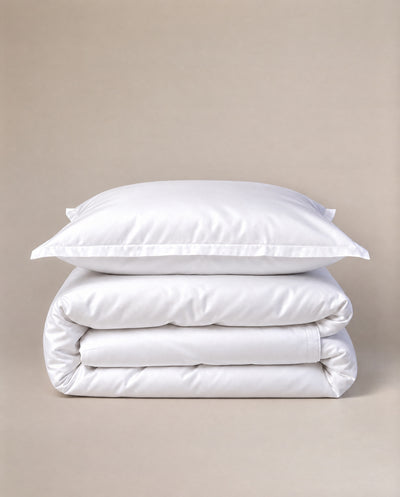
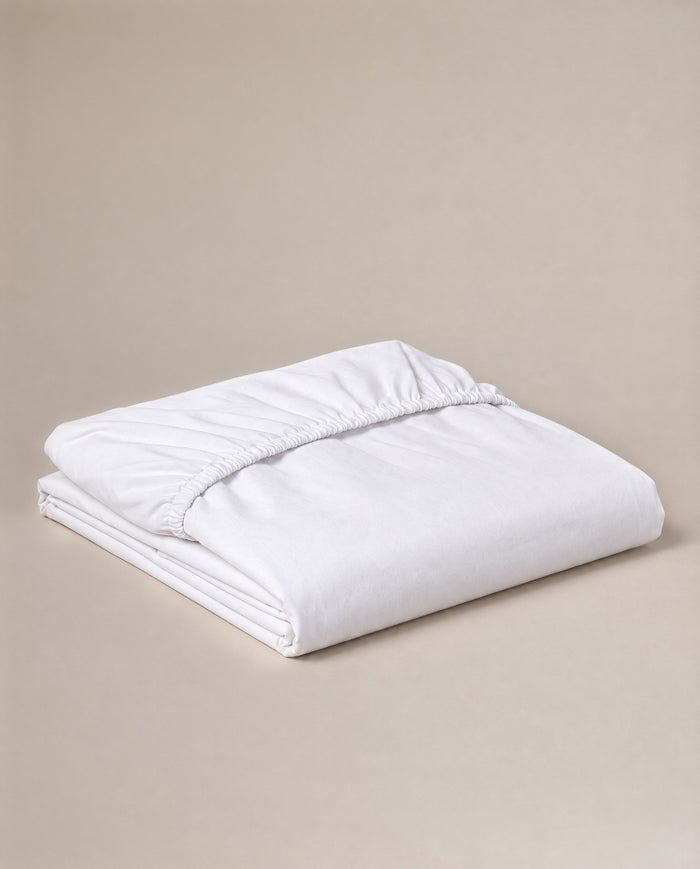
Three things set a berth apart from the bed at home: its shape, the damp and the lack of space. Berths are rarely rectangular, the air stands still under the mattress and there is seldom room for thick layers. So the bedding has to work a little harder. A Ralph Flat Sheet in 100 % cotton percale is a good place to start. It is smooth, cool against the skin and washes at 60 degrees, which is exactly what a season afloat demands.
If you want an overview of our sizes, they are gathered in the guide Swedish bedding sizes: how sheets, duvet covers and pillowcases work.
Why do ordinary sheets rarely fit a berth?
Because a berth is not a bed. A berth is a sleeping place on a boat or ship, usually a small space, and it follows the shape of the hull rather than any standard size. The forepeak narrows towards the bow, the aft berth may have an angled corner and many mattresses come in two or three pieces.
A fitted sheet is sewn for a rectangular mattress of a certain depth. If the measurements are off, the elastic is either too loose or too tight and the sheet creeps up during the night. A flat sheet without elastic has no such problem. You lay it over the mattress, fold the excess under the edges and let it follow the berth. If the berth is wide and straight, say a double berth in the aft cabin of a larger boat, a Ralph Fitted Sheet can work well. Measure first.
| Item | Best when | Wash |
|---|---|---|
| Flat sheet without elastic | The berth is angled, narrow or split into several mattresses | 60 degrees |
| Fitted sheet | The mattress is rectangular and matches one of our standard sizes | 60 degrees |
| Mattress protector | Always, as a washable layer between you and the mattress | 40 degrees, gentle cycle |
| Fibre duvet and fibre pillow | You want to wash everything at the end of the season | 60 degrees |
How do you keep the berth dry and fresh?
By letting air reach the mattress and by washing whatever lies closest to your body often. Damp is a boat's constant companion. Warm breath meets a cold hull, and the condensation ends up under the mattress where nobody sees it.
The Swedish National Board of Housing, Boverket, writes that damp is the single biggest cause of damage and problems with the indoor environment in homes, and that damp damage can lead to allergies, asthma and other illnesses. A boat is not a house, but the principle is the same. Where damp stands still, mould can take hold.
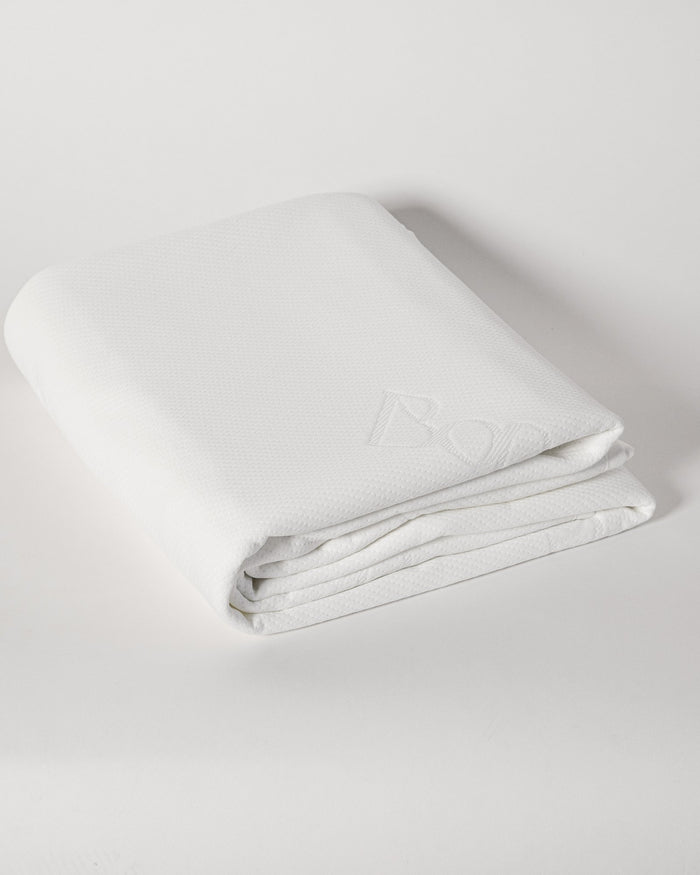
A mattress protector makes a difference every day. The Paisley Briggs Mattress Protector sits between the sheet and the mattress, catches what would otherwise sink into the mattress and washes at 40 degrees on a gentle cycle. It dries far faster than a whole mattress. How a protector and a mattress topper relate to each other is explained in our guide to mattress protectors and toppers.
The rest is routine. Stand the mattress on its edge when you leave the boat, open the hatches and leave the berth open. Take the bedding home and wash it between trips instead of leaving it on board.
Fibre or down on a boat?
Fibre. At home, down can be a wonderful choice, but on board you want a duvet and a pillow that cope with damp, wash at 60 degrees and are dry again by next weekend.
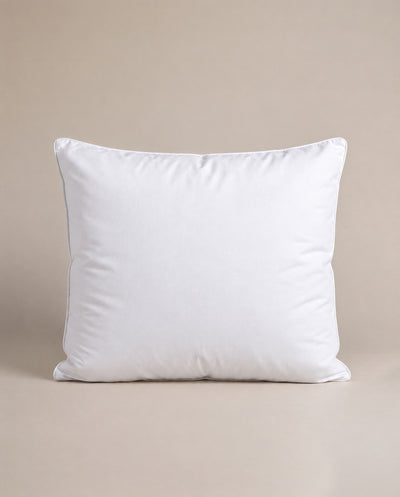
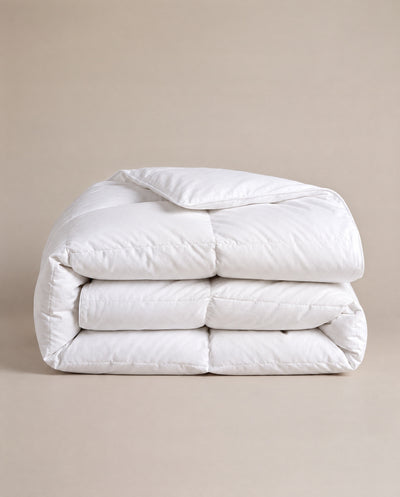
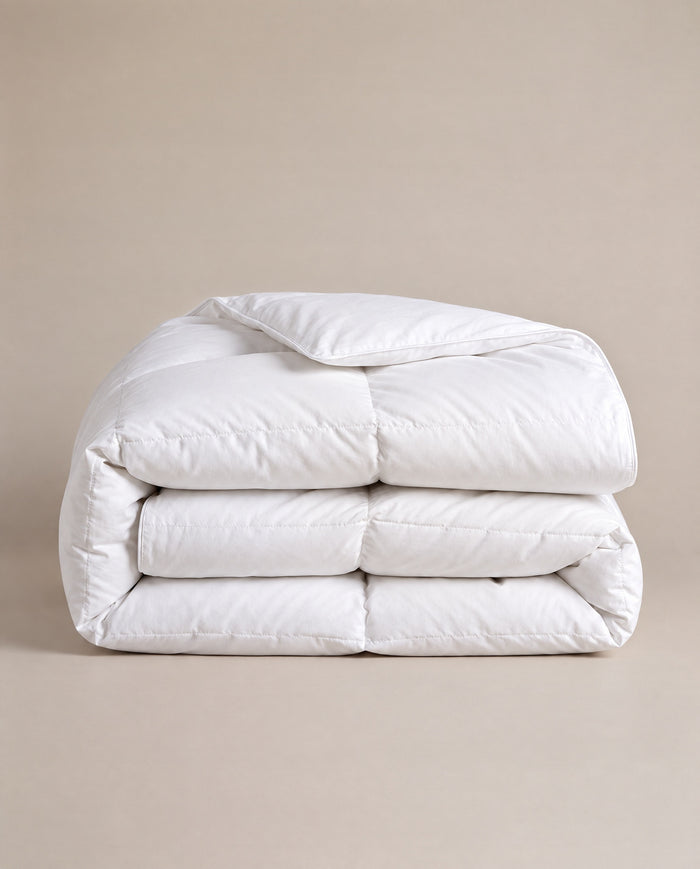
The A Funky Dream Hotel Duvet has a 100 % cotton shell and a filling of siliconised hollow polyester fibre. It is allergy friendly, washes at 60 degrees and comes in 150×210, a size that fits most berths. It is the same duvet the ESS Group hotels make their beds with, tried by guests night after night. The A Funky Dream Hotel Pillow has the same filling and the same care instructions. In a tight berth, 50×60 is the practical choice, while 50×90 with 1,300 grams of filling is the hotel version for those with room.
Down is not wrong, but it asks more of you. A down duvet takes longer to dry through and should never lie damp in a closed boat. If you already own a Sense of Satisfaction Down Duvet you love, take it home after every trip and let it dry properly. We go through the differences between the materials in our guide to natural fibres and synthetics in bed.
A feather mattress topper such as Cody Lamont belongs in the bedroom, not the berth. It comes in 160×200 and 180×200 and cannot be washed. On a boat, a mattress protector and a good flat sheet do more good.
What fabric should the sheets be?
Cotton, ideally in a dense, smooth weave such as percale. Cotton breathes, takes high wash temperatures and feels cool when the evenings are warm. Nobody irons on board, so choose a weave that feels good straight off the line. Percale is that weave: dense, matte and crisp.
Ralph is woven in 100 % cotton percale with 200 threads per square inch and is certified to OEKO-TEX Standard 100, which means every component of the textile has been tested for harmful substances. To learn what makes percale so crisp, read on in our guide to percale. How to wash and dry the sheets properly is covered in our care guide for bedding.
Synthetic and microfibre sheets are often marketed as quick drying, and that is true. But they breathe less well and can feel clammy on a warm July night in a closed cabin. Cotton washed at 60 degrees and dried in the wind is what feels best across a whole season.
How to make up the berth
- Measure the berth. Length, widest point, narrowest point and mattress depth. Note how many mattress sections it has.
- Lay the mattress protector first. It protects the mattress and is the layer you wash most often.
- Make the bed with a flat sheet. Lay it over, smooth it out and tuck the excess under the mattress. If the mattress is split, tuck the sheet between the sections so it does not slide.
- Choose a light duvet. A 150×210 fibre duvet is enough for a single berth. In a double berth, two single duvets are easier to handle than one large one.
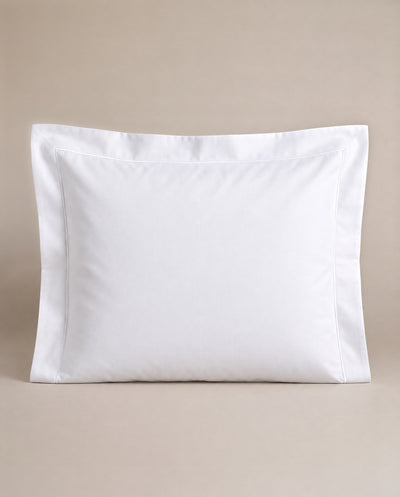
- Choose a 50×60 pillow. The standard size fits where 50×90 does not, and pillowcases are easy to change.
- Air when you go ashore. Stand the mattress up, open the hatches and let the berth dry out.
Shop
Products in this guide

Frequently asked questions
Which sheets work best on a boat?
A cotton flat sheet without elastic. It can be tucked around an angled or split mattress and washes at 60 degrees. A fitted sheet only works if the berth is rectangular and matches the sheet's measurements.
Can you use fitted sheets on a boat?
Yes, if the mattress is rectangular, a standard size and roughly the depth of an ordinary mattress. Measure length, width and depth before you order. If the berth is angled or split into pieces, a flat sheet without elastic is easier.
How do you avoid damp and mould under a boat mattress?
Let air reach the mattress. Stand it on its edge when you leave the boat, open hatches and lockers and use a mattress protector that you wash often. Damp bedding should not stay in a closed boat between trips.
Should you use a down or fibre duvet on a boat?
A fibre duvet. It copes better with damp, washes at 60 degrees and dries faster. Down is lovely but needs to dry properly after every trip and should not be stored damp on board.
Does a mattress topper fit a boat berth?
Rarely. Toppers are made in bed sizes such as 160×200 and 180×200, and feather toppers cannot be washed. In a berth, a washable mattress protector and a smooth flat sheet do more good.
Our advice
Keep it simple and washable. A mattress protector, a percale flat sheet, a 150×210 fibre duvet and a 50×60 pillow are all a berth needs. Measure before you order, air every time you leave the boat and wash at 60 degrees between trips. Then a dry, cool, clean bed greets you every time you step aboard. You will find our flat and fitted sheets in the sheets collection, and the A Funky Dream Hotel Duvet and Hotel Pillow have the same filling the ESS Group hotels make their beds with.